

Introduction
There’s nothing quite like the comforting aroma that wafts from a slow cooker on a chilly day, promising a meal that’s both hearty and incredibly tender. Our “Seasoned Sauce Over Cubed Beef” recipe embodies the very essence of effortless comfort food. Imagine succulent cubes of beef, slow-cooked to perfection in a rich, deeply flavored sauce, transforming tough cuts into melt-in-your-mouth morsels. This dish is a true set-it-and-forget-it marvel, ideal for busy weeknights or lazy weekends when you crave a homemade meal without the constant fuss.
This recipe celebrates the magic of slow cooking, allowing simple ingredients to meld and deepen in flavor over several hours. The beef, typically a more economical cut like chuck roast, benefits immensely from the low and slow heat, breaking down connective tissues and absorbing every nuance of the aromatic sauce. The seasoned sauce, a symphony of herbs, spices, and savory liquids, coats each piece of beef, creating an irresistible gravy that begs to be spooned over your favorite accompaniments. It’s a dish that not only satisfies hunger but also nourishes the soul, bringing warmth and flavor to any table.
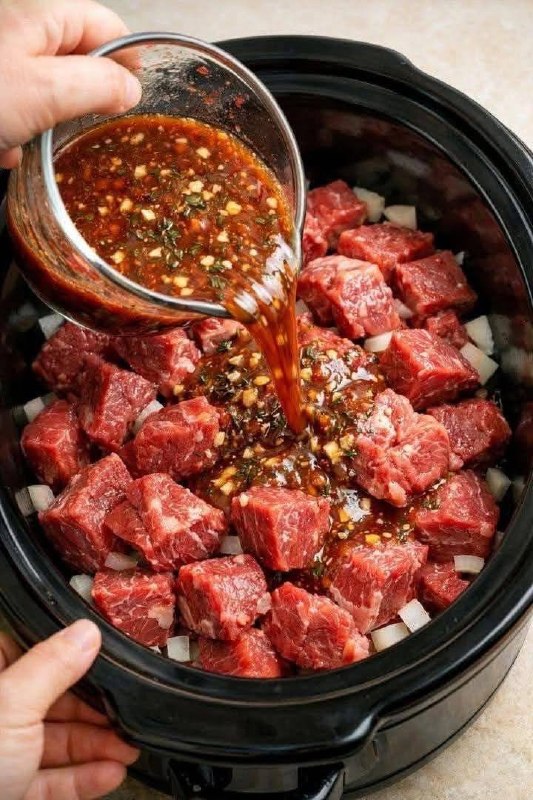
What makes this particular slow cooker beef so special is the thoughtful layering of flavors right from the start. We begin with a bed of sweet onions, which caramelize subtly as they cook, providing a foundational sweetness. Then comes the beef, nestled among the onions, ready to absorb the rich, viscous sauce poured generously over the top. This method ensures that every component is infused with taste, resulting in a dish that is consistently delicious, incredibly tender, and remarkably easy to prepare. Get ready to discover your new favorite slow cooker beef recipe!
Nutritional Information
Per serving (approximate values):
- Calories: 480
- Protein: 45g
- Carbohydrates: 25g
- Fat: 22g
- Fiber: 3g
- Sodium: 850mg
Ingredients
- 2.5-3 pounds boneless beef chuck roast, cut into 1.5-inch cubes
- 1 large yellow onion, diced
- 3 cloves garlic, minced
- 1 cup beef broth
- 1/2 cup dry red wine (such as Cabernet Sauvignon or Merlot), optional but recommended
- 1/4 cup soy sauce (low sodium preferred)
- 2 tablespoons Worcestershire sauce
- 2 tablespoons balsamic vinegar
- 1 tablespoon brown sugar, packed
- 1 tablespoon olive oil
- 1 teaspoon dried rosemary
- 1 teaspoon dried thyme
- 1/2 teaspoon smoked paprika
- 1/4 teaspoon red pepper flakes (optional, for a hint of heat)
- 1/4 cup fresh parsley, chopped (for garnish)
- Salt and freshly ground black pepper to taste
- 2 tablespoons cornstarch (for thickening, if desired)
- 2 tablespoons cold water (for cornstarch slurry)
Instructions
- Begin by preparing your beef. Pat the beef cubes dry with paper towels. This helps with browning if you choose to sear it, and also helps seasonings adhere better. Season the beef generously with salt and freshly ground black pepper on all sides.
- Dice the large yellow onion. Spread the diced onion evenly across the bottom of your 6-quart or larger slow cooker. This will create a flavorful bed for the beef and prevent sticking.
- Place the seasoned beef cubes directly on top of the diced onions in the slow cooker. Arrange them in a single layer as much as possible, though some overlapping is fine.
- In a medium bowl, prepare the seasoned sauce. Combine the minced garlic, beef broth, red wine (if using), soy sauce, Worcestershire sauce, balsamic vinegar, brown sugar, olive oil, dried rosemary, dried thyme, smoked paprika, and red pepper flakes (if using). Whisk all the ingredients together thoroughly until the brown sugar is dissolved and everything is well combined.
- Carefully pour the prepared seasoned sauce evenly over the beef cubes and onions in the slow cooker. Ensure that the beef is mostly submerged in the liquid.
- Cover the slow cooker with its lid. Set the slow cooker to the LOW setting and cook for 6-8 hours, or set it to the HIGH setting and cook for 3-4 hours. The cooking time will vary slightly depending on your slow cooker and the size of your beef cubes.
- The beef is ready when it is incredibly tender and easily shreds with a fork. To check for doneness, carefully remove a piece of beef and test its tenderness.
- If you prefer a thicker sauce, you can create a cornstarch slurry during the last 30 minutes of cooking. In a small bowl, whisk together 2 tablespoons of cornstarch with 2 tablespoons of cold water until smooth. Stir the slurry into the hot sauce in the slow cooker. Replace the lid and continue cooking on high for another 20-30 minutes, or until the sauce has thickened to your desired consistency.
- Once cooked, taste the sauce and adjust seasonings if necessary, adding more salt or pepper as desired.
- Serve the slow-cooked seasoned beef and sauce hot. Garnish with fresh chopped parsley just before serving for a burst of color and freshness.
Cooking Tips and Variations
For an even deeper flavor profile, consider searing the beef cubes in a hot skillet with a tablespoon of olive oil before adding them to the slow cooker. Browning the beef creates a rich crust through the Maillard reaction, locking in juices and adding complex savory notes that truly elevate the dish. This step, while optional, makes a noticeable difference in the final taste of the stew.
Don’t be afraid to customize the vegetables! While onions provide a fantastic base, adding other hearty root vegetables can transform this into a more complete pot roast. Carrots, cut into thick rounds, and celery, chopped into 1-inch pieces, are excellent additions. You can also include diced potatoes (Yukon Gold or red potatoes work well) during the last 2-3 hours of cooking so they don’t become overly mushy. For a touch of earthiness, sliced mushrooms can be added with the sauce.
Experiment with the sauce’s flavor profile. For an Asian twist, swap the red wine and balsamic vinegar for rice wine vinegar and a touch of sesame oil, and consider adding a slice of fresh ginger to the sauce. If you prefer a richer, more robust American stew, you can add a tablespoon of tomato paste to the sauce mixture. For a smoky kick, a dash of liquid smoke or more smoked paprika can be incorporated. Always taste the sauce before pouring it over the beef and adjust seasonings to your preference.
To ensure your beef is perfectly tender, avoid lifting the lid of the slow cooker too often. Each time you peek, you release valuable heat and moisture, which can extend the cooking time and potentially affect the tenderness of the meat. Trust the process and let the slow cooker do its magic. Only open the lid when absolutely necessary, such as when adding thickeners or checking for doneness towards the end of the cooking cycle.
The choice of beef cut is crucial for slow cooking. Chuck roast, stew meat, or even beef short ribs are ideal because they contain a good amount of connective tissue and fat. These elements break down beautifully over low heat, rendering the meat incredibly tender and juicy. Leaner cuts like sirloin or round steak can become dry and tough in the slow cooker, so stick to cuts known for their slow-cooking prowess.
Storage and Reheating
To store any leftover slow-cooked seasoned beef, allow the dish to cool completely to room temperature first. This is important to prevent bacterial growth and maintain food safety. Once cooled, transfer the beef and sauce into an airtight container. It can be safely stored in the refrigerator for up to 3-4 days. The flavors often deepen and meld even further overnight, making leftovers just as delicious, if not more so, than the freshly cooked meal.
For longer-term storage, this dish freezes exceptionally well. Divide the cooled beef and sauce into freezer-safe containers or heavy-duty freezer bags. If using bags, lay them flat to freeze, which saves space and allows for quicker thawing. It can be stored in the freezer for up to 2-3 months. When ready to enjoy, transfer the frozen contents to the refrigerator to thaw overnight before reheating.
To reheat, the best method depends on the quantity. For individual portions, you can easily reheat the beef and sauce in the microwave. Place a portion in a microwave-safe dish, cover loosely, and heat on medium-high power for 2-3 minutes, stirring halfway through, until heated through. Be careful not to overheat, as this can dry out the beef.
For larger quantities or a more gentle reheating, transfer the leftovers to a saucepan or pot on the stovetop. Heat over medium-low heat, stirring occasionally, until the beef and sauce are simmering and thoroughly heated. If the sauce has thickened too much during refrigeration, you can add a splash of beef broth or water to thin it out to your desired consistency. You can also reheat it in the slow cooker on the “warm” setting until hot, which is a great option if you’re serving a crowd again.
Can I make this recipe ahead of time?
Yes, absolutely! This slow cooker beef is an excellent make-ahead meal. In fact, many find that the flavors deepen and improve after a day or two in the refrigerator. You can prepare the entire dish, let it cool, and store it in an airtight container in the fridge for up to 3-4 days. When you’re ready to serve, simply reheat gently on the stovetop or in the microwave until warmed through.
What are the best serving suggestions for this dish?
This versatile dish pairs wonderfully with a variety of accompaniments. Classic choices include creamy mashed potatoes, which are perfect for soaking up the rich, savory sauce. Fluffy white rice or brown rice, egg noodles, or even polenta also make excellent bases. For a complete meal, consider serving it alongside roasted vegetables like asparagus or green beans, or a simple side salad to add a touch of freshness and balance.
Can I add vegetables directly to the slow cooker with the beef?
Yes, you can! Hearty root vegetables like carrots, celery, and potatoes work very well in the slow cooker alongside the beef. If adding carrots and celery, you can include them at the beginning of the cooking process with the onions. If adding potatoes, especially if you prefer them to hold their shape and not become too soft, it’s best to add them during the last 2-3 hours of cooking. This ensures they are tender but not mushy.