

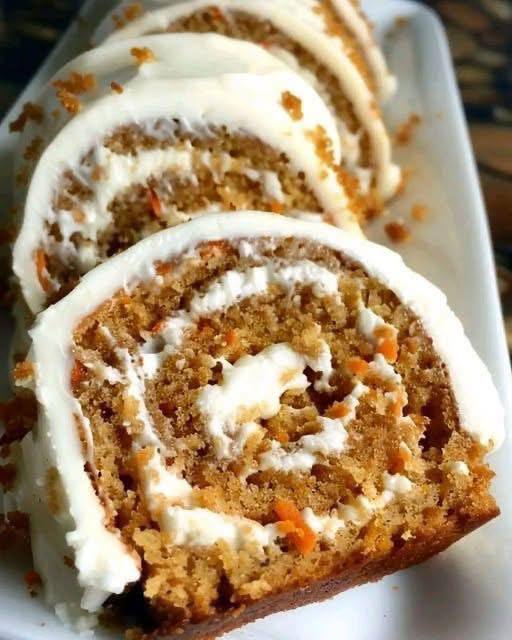
There are few desserts that evoke such a comforting sense of nostalgia and elegant charm as the classic carrot cake roll. This delightful confection takes all the beloved flavors of a traditional carrot cake – the moist, spiced crumb, the sweet earthiness of fresh carrots – and transforms them into a show-stopping, spiraled masterpiece. Perfect for holiday gatherings, special occasions, or simply a weekend treat, the carrot cake roll offers a beautiful presentation with every slice, showcasing its luscious cream cheese filling nestled within a tender, golden cake.
What makes this particular recipe truly special is its perfect balance of flavor and texture. The cake itself is incredibly moist and tender, infused with warming spices like cinnamon and nutmeg, and studded with finely shredded carrots that keep it wonderfully soft. This delicate cake is then generously spread with a rich, tangy cream cheese frosting – the quintessential partner to carrot cake – before being carefully rolled into a beautiful log. The ease of serving, with its pre-portioned slices revealing a stunning spiral, combined with its irresistible taste, makes it a guaranteed crowd-pleaser that looks far more complicated to make than it actually is.
In this comprehensive guide, we’ll walk you through every step to create a perfect carrot cake roll, from preparing the ideal batter to mastering the crucial rolling technique. You’ll learn how to whip up a dreamy cream cheese frosting, assemble your roll like a pro, and discover tips for storage and delightful variations. Get ready to bake a dessert that’s not just delicious, but also a feast for the eyes, promising sweet satisfaction with every bite.
Nutritional Information
Per serving (approximate values):
- Calories: 380
- Protein: 4g
- Carbohydrates: 50g
- Fat: 19g
- Fiber: 2g
- Sodium: 220mg
Ingredients
For the Carrot Cake Roll:
- 1 cup all-purpose flour
- 1 teaspoon baking soda
- 1 teaspoon ground cinnamon
- 1/2 teaspoon ground nutmeg
- 1/4 teaspoon ground ginger (optional, but recommended)
- 1/2 teaspoon salt
- 3 large eggs, at room temperature
- 1 cup granulated sugar
- 1/2 cup packed light brown sugar
- 1/2 cup vegetable oil (or other neutral oil)
- 1 teaspoon vanilla extract
- 2 cups finely shredded carrots (about 2-3 medium carrots)
- 1/2 cup finely chopped pecans or walnuts (optional)
- Powdered sugar, for dusting the towel
For the Cream Cheese Frosting:
- 8 ounces cream cheese, softened
- 1/2 cup (1 stick) unsalted butter, softened
- 3-4 cups powdered sugar, sifted
- 1 teaspoon vanilla extract
- 1-2 tablespoons milk or heavy cream (if needed for consistency)
Instructions
- Preheat your oven to 350°F (175°C). Line a 15×10-inch jelly roll pan with parchment paper, allowing the paper to extend over the short ends for easy lifting. Lightly grease the parchment paper.
- In a medium bowl, whisk together the all-purpose flour, baking soda, cinnamon, nutmeg, ginger (if using), and salt. Set aside.
- In a large bowl, using an electric mixer, beat the eggs on medium-high speed for 2-3 minutes until light and fluffy. Gradually add the granulated sugar and brown sugar, beating until well combined and pale, about 2-3 more minutes.
- Reduce the mixer speed to low and slowly beat in the vegetable oil and vanilla extract until just combined.
- Gradually add the dry ingredients to the wet ingredients, mixing on low speed until just incorporated. Be careful not to overmix.
- Gently fold in the shredded carrots and chopped nuts (if using) with a spatula until evenly distributed.
- Pour the batter evenly into the prepared jelly roll pan, spreading it to the edges with an offset spatula.
- Bake for 12-15 minutes, or until the cake springs back when lightly touched and a toothpick inserted into the center comes out clean.
- While the cake is baking, lay a clean kitchen towel (preferably lint-free) on a flat surface and generously dust it with powdered sugar. This dusting is crucial to prevent sticking.
- Immediately upon removing the cake from the oven, invert it onto the prepared powdered sugar-dusted towel. Carefully peel off the parchment paper.
- Starting from one of the short ends, carefully and tightly roll the cake and the towel together. Place the rolled cake, seam-side down, on a wire rack and let it cool completely for at least 1 hour. This step “trains” the cake to hold its rolled shape and prevents cracking later.
- While the cake is cooling, prepare the cream cheese frosting. In a large bowl, using an electric mixer, beat the softened cream cheese and softened butter together on medium speed until smooth and creamy, about 2-3 minutes.
- Gradually add the sifted powdered sugar, one cup at a time, beating on low speed until combined, then increasing to medium-high until light and fluffy. Beat in the vanilla extract. If the frosting is too thick, add milk or heavy cream one tablespoon at a time until it reaches a spreadable consistency.
- Once the cake is completely cool, carefully unroll it from the towel. It may crack slightly, but the frosting will hide most imperfections.
- Evenly spread about 2/3 of the cream cheese frosting over the entire surface of the unrolled cake, leaving a small border (about 1/2 inch) around the edges without frosting.
- Starting from the same short end you rolled it from initially, carefully and tightly re-roll the cake (without the towel this time).
- Transfer the rolled cake, seam-side down, to a serving platter.
- Use the remaining frosting to spread evenly over the top and sides of the cake roll. You can create decorative swirls with an offset spatula or the back of a spoon.
- Garnish with additional chopped nuts, a light dusting of cinnamon, or small carrot shavings if desired.
- Refrigerate the carrot cake roll for at least 1-2 hours before slicing and serving. Chilling allows the frosting to set and makes for much cleaner slices.
Cooking Tips and Variations
For the best carrot cake roll, always ensure your ingredients, especially the eggs, cream cheese, and butter, are at room temperature. This allows them to cream together smoothly, resulting in a more uniform batter and a lump-free, airy frosting. When shredding carrots, use the fine side of a box grater or a food processor with a shredding disc for very fine strands; this helps them integrate seamlessly into the cake and keeps the texture tender. Do not overmix the cake batter once the dry ingredients are added; overmixing can develop the gluten too much, leading to a tough cake.
The rolling step is the most critical to prevent cracking. Make sure to roll the cake immediately after it comes out of the oven, while it’s still warm and pliable. The powdered sugar on the towel not only prevents sticking but also adds a subtle sweetness to the outside of the cake. If your cake does crack a little during unrolling or re-rolling, don’t despair! The generous layer of cream cheese frosting is very forgiving and will beautifully conceal any minor imperfections, leaving you with a picture-perfect dessert.
To vary the flavor profile, consider adding 1/4 cup of crushed pineapple (well-drained) or shredded coconut to the cake batter along with the carrots. A teaspoon of orange zest can also brighten the cake’s flavor beautifully. For the frosting, a hint of maple extract or a dash of orange zest can elevate the classic cream cheese taste. You can also experiment with different nuts, such as walnuts or pecans, or omit them entirely if preferred. For a richer, more decadent frosting, use full-fat cream cheese and butter.
Storage and Reheating
To store your leftover carrot cake roll, place it in an airtight container. It will keep beautifully in the refrigerator for up to 3-4 days. It’s best to store it whole and slice off individual portions as needed, as this helps to keep the cake moist. If you’ve already sliced it, arrange the slices in a single layer in the container or place parchment paper between layers to prevent them from sticking together.
While carrot cake roll is generally served chilled, if you prefer it at room temperature, simply take it out of the refrigerator about 30 minutes before serving. This allows the frosting to soften slightly and the cake’s flavors to become more pronounced. We do not recommend reheating the carrot cake roll in a microwave or oven, as this can melt the frosting and dry out the cake. It’s a dessert that shines when served cool or at room temperature.
This carrot cake roll is also an excellent make-ahead dessert. You can bake the cake and roll it in the towel, then let it cool completely before wrapping it tightly in plastic wrap and storing it at room temperature overnight. Prepare the frosting separately and store it in an airtight container in the refrigerator. The next day, simply unroll the cake, frost, re-roll, and chill. If you want to prepare it even further in advance, the unfrosted, rolled cake (still wrapped in the towel and then plastic wrap) can be frozen for up to 1 month. Thaw it in the refrigerator overnight before unrolling and frosting. The frosted cake roll itself can also be frozen, tightly wrapped, for up to 1 month. Thaw it in the refrigerator overnight and let it come to room temperature for 30 minutes before serving.
Frequently Asked Questions
What kind of pan do I need for a carrot cake roll?
You will need a 15×10-inch jelly roll pan. This size is crucial for achieving the correct thickness of the cake, which needs to be thin enough to roll without cracking, but thick enough to be substantial. Using a larger or smaller pan can affect baking time and the cake’s ability to roll properly.
Why did my carrot cake roll crack when I unrolled it?
Cracking is a common issue and usually occurs if the cake wasn’t rolled while warm, or if it wasn’t rolled tightly enough with the towel initially. The initial warm roll “trains” the cake. If the cake cools completely unrolled, it loses its flexibility. Also, ensure you don’t overbake the cake, as a drier cake is more prone to cracking. Don’t worry too much though, the frosting is very forgiving and will often hide minor cracks!
Can I make this carrot cake roll gluten-free?
Yes, you can often adapt this recipe to be gluten-free. Substitute the all-purpose flour with an equal amount of a good quality 1:1 gluten-free baking flour blend that contains xanthan gum. Follow the rest of the instructions as written. Gluten-free cakes can sometimes be a bit more delicate, so handle the warm cake gently during the initial rolling step.
How can I make sure my cream cheese frosting isn’t too runny or too stiff?
The key to perfect cream cheese frosting is using softened (but not melted) cream cheese and butter. If your frosting is too runny, it might be because your butter or cream cheese was too warm, or you added too much liquid (milk/cream). You can try adding more sifted powdered sugar, or chilling the frosting in the refrigerator for 15-30 minutes to firm it up. If it’s too stiff, add milk or heavy cream one tablespoon at a time until it reaches a spreadable consistency.