

Introduction
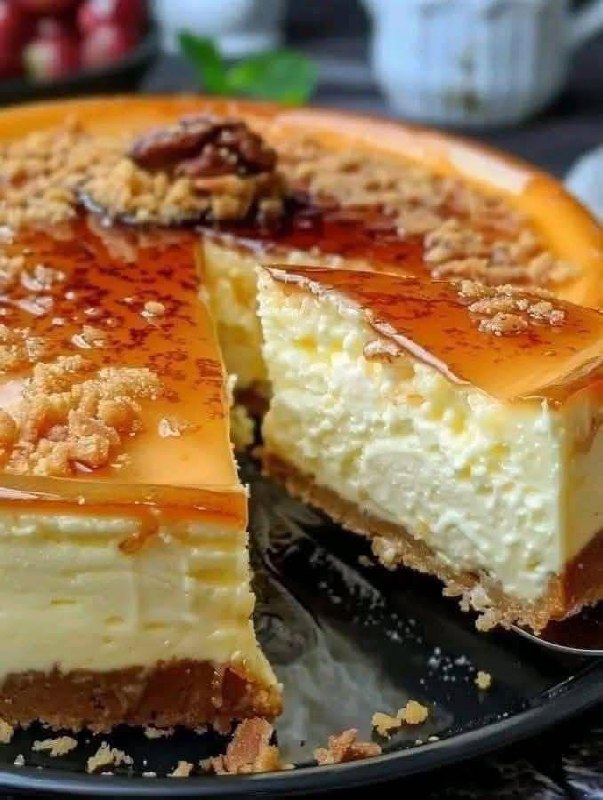
Prepare to be enchanted by a dessert that truly has it all: our Creamy Caramel Cheesecake. This isn’t just any cheesecake; it’s a symphony of textures and flavors, a masterpiece that combines the silky-smooth indulgence of a classic cheesecake with the rich, buttery embrace of homemade caramel, all resting on a perfectly crisp, nutty crust. It’s the kind of dessert that makes an entrance, turning any meal into a special occasion and leaving a lasting impression on every palate it graces.
What makes this cheesecake so irresistibly popular? It’s the harmonious balance. The tangy, creamy cheesecake filling provides the perfect counterpoint to the sweet, slightly salty caramel. Each forkful delivers a delightful contrast: the cool, dense creaminess of the filling, the satisfying crunch of the crust, and the gooey, luxurious caramel that cascades over the top. It’s a dessert that speaks of celebration, comfort, and pure, unadulterated pleasure, making it a beloved choice for holidays, dinner parties, or simply a decadent treat to brighten any day.
While its appearance might suggest a complex undertaking, crafting this Creamy Caramel Cheesecake at home is surprisingly achievable. We’ll guide you through each step, from perfecting the golden crust to achieving that signature crack-free cheesecake and, of course, simmering up a luscious caramel sauce that will have you licking the spoon. So, roll up your sleeves, gather your ingredients, and get ready to create a dessert that tastes like it came straight from a gourmet bakery, but with the undeniable satisfaction of being handmade in your very own kitchen.
Nutritional Information
Per serving (approximate values):
- Calories: 650
- Protein: 10g
- Carbohydrates: 65g
- Fat: 40g
- Fiber: 2g
- Sodium: 280mg
Ingredients
For the Crust:
- 2 cups (about 200g) graham cracker crumbs (from approximately 14-16 full graham cracker sheets)
- 1/2 cup (113g) unsalted butter, melted
- 1/4 cup (50g) granulated sugar
- 1/4 teaspoon ground cinnamon (optional)
For the Cheesecake Filling:
- 32 ounces (900g) full-fat cream cheese, softened to room temperature
- 1 1/2 cups (300g) granulated sugar
- 1/4 cup (60ml) all-purpose flour
- 1 teaspoon pure vanilla extract
- 1/2 teaspoon salt
- 4 large eggs, at room temperature
- 1/2 cup (120ml) sour cream, at room temperature
For the Caramel Topping:
- 1 cup (200g) granulated sugar
- 1/4 cup (60ml) water
- 1/2 cup (113g) unsalted butter, cut into cubes
- 1/2 cup (120ml) heavy cream, warmed
- 1 teaspoon pure vanilla extract
- 1/2 teaspoon flaky sea salt (optional, for salted caramel)
For Garnish (Optional):
- Chopped toasted walnuts or pecans
- Additional flaky sea salt
Instructions
- Prepare the Crust: Preheat your oven to 350°F (175°C). In a medium bowl, combine the graham cracker crumbs, melted butter, granulated sugar, and cinnamon (if using). Mix until well combined and the crumbs are moistened.
- Press the mixture firmly and evenly into the bottom of a 9-inch springform pan. You can use the bottom of a glass or your fingers to get an even layer.
- Bake the crust for 8-10 minutes, or until lightly golden and fragrant. Remove from the oven and let cool slightly while you prepare the filling. Reduce oven temperature to 325°F (160°C).
- Prepare the Water Bath (Optional but Recommended): Wrap the outside of your springform pan tightly with several layers of heavy-duty aluminum foil to prevent water from seeping in. This is crucial if using a water bath.
- Make the Cheesecake Filling: In the bowl of a stand mixer fitted with the paddle attachment (or using an electric hand mixer), beat the softened cream cheese on medium speed until smooth and creamy, about 2-3 minutes. Scrape down the sides of the bowl.
- Gradually add the granulated sugar, flour, vanilla extract, and salt to the cream cheese, beating on low speed until just combined and smooth. Be careful not to overmix.
- Add the eggs one at a time, beating on low speed until just incorporated after each addition. Do not overmix; overmixing incorporates too much air, which can lead to cracks.
- Stir in the sour cream until just combined. The batter should be smooth and creamy.
- Bake the Cheesecake: Pour the cheesecake filling over the cooled crust in the prepared springform pan.
- If using a water bath, place the foil-wrapped springform pan into a larger roasting pan. Carefully pour hot water into the roasting pan until it comes about halfway up the sides of the springform pan.
- Carefully transfer the roasting pan with the cheesecake to the preheated 325°F (160°C) oven.
- Bake for 60-75 minutes, or until the edges are set but the center still jiggles slightly when gently shaken.
- Cool the Cheesecake: Turn off the oven, crack the oven door open slightly, and let the cheesecake cool in the oven for 1 hour. This slow cooling process helps prevent cracks.
- Remove the cheesecake from the oven and water bath (if used). Carefully remove the foil. Let it cool completely on a wire rack at room temperature for another 1-2 hours.
- Once completely cooled, cover the cheesecake loosely with plastic wrap and refrigerate for at least 6 hours, or preferably overnight, to allow it to set fully.
- Make the Caramel Topping: In a medium heavy-bottomed saucepan, combine the granulated sugar and water. Stir gently to moisten all the sugar.
- Cook over medium heat without stirring, until the sugar dissolves and the mixture comes to a boil. Continue to cook, swirling the pan occasionally, until the syrup turns a rich amber color. This can take 8-12 minutes. Watch it carefully as it can burn quickly once it starts to color.
- Immediately remove from heat. Carefully and slowly whisk in the cubed butter until fully melted and incorporated. Be cautious, as the mixture will bubble up vigorously.
- Gradually pour in the warm heavy cream, whisking constantly until smooth. Again, the mixture will bubble and steam. Continue whisking until the caramel is smooth and uniform.
- Stir in the vanilla extract and flaky sea salt (if using).
- Pour the caramel into a heatproof jar or bowl and let it cool to room temperature, stirring occasionally. It will thicken as it cools.
- Assemble and Serve: Once the cheesecake is thoroughly chilled and the caramel is cooled, carefully run a thin knife around the edge of the springform pan before releasing the sides.
- Pour the cooled caramel topping over the chilled cheesecake, spreading it evenly to the edges.
- Garnish with chopped toasted walnuts or pecans and an extra sprinkle of flaky sea salt, if desired.
- Slice and serve immediately.
Cooking Tips and Variations
Preventing Cracks: The water bath is your best friend for a crack-free cheesecake. The steam creates a moist environment that helps the cheesecake bake evenly and prevents the top from drying out and cracking. Additionally, avoid overmixing the batter, especially after adding the eggs, as this incorporates too much air. Finally, don’t rush the cooling process; allowing it to cool slowly in the oven with the door ajar is crucial.
Room Temperature Ingredients: Ensure your cream cheese, eggs, and sour cream are all at room temperature. This is vital for a smooth, lump-free batter that incorporates air evenly and bakes beautifully.
Don’t Overbake: The cheesecake is done when the edges are set, but the center still has a slight wobble. It will continue to set as it cools and chills. Overbaking leads to a dry, cracked cheesecake.
Achieving Perfect Caramel: When making caramel, resist the urge to stir once the sugar and water mixture starts boiling. Swirl the pan gently instead. Have all your ingredients (butter, cream) measured and ready before you start, as caramel cooks quickly. If your caramel seizes up when you add the cream, don’t panic! Simply return it to low heat and stir continuously until it smooths out again.
Crust Variations: For an alternative crust, you can use crushed chocolate wafer cookies, shortbread cookies, or even gingersnaps for a spiced twist. Adjust the amount of melted butter as needed to achieve a moist, pressable mixture.
Salted Caramel Delight: For a truly irresistible salted caramel cheesecake, be generous with the flaky sea salt in your caramel topping. You can also sprinkle a little extra on top of the finished cheesecake just before serving.
Nutty Additions: Consider adding finely chopped toasted pecans or walnuts directly into the cheesecake batter for an extra layer of texture and flavor. About 1/2 cup would be perfect.
Spiced Filling: A pinch of cinnamon, nutmeg, or even a touch of cardamom can add warmth and complexity to the cheesecake filling, especially if you’re using a spiced crust.
Storage and Reheating
Storage: This Creamy Caramel Cheesecake stores beautifully. Cover the cheesecake tightly with plastic wrap or place it in an airtight container. It will keep well in the refrigerator for up to 5-7 days. For longer storage, you can freeze individual slices or the whole cheesecake (without the caramel topping) for up to 1-2 months. If freezing the whole cheesecake, wrap it first in plastic wrap, then in aluminum foil.
Reheating (for frozen cheesecake): If you’ve frozen the cheesecake, transfer it to the refrigerator to thaw overnight. Once thawed, you can then add the freshly made caramel topping and any garnishes before serving. Cheesecake is best enjoyed chilled, so reheating is not typically recommended for the baked portion. If you prefer a slightly less cold slice, you can let it sit at room temperature for 15-20 minutes before serving.
Frequently Asked Questions
What if my caramel seizes or crystallizes?
Caramel seizing or crystallizing is a common issue. If it seizes when you add the cream or butter, don’t worry! Simply return the saucepan to low heat and gently stir the mixture until the sugar crystals dissolve and it becomes smooth again. For crystallization, ensure your pot is very clean before starting, and avoid stirring the sugar and water once it boils; swirl the pan instead.
Can I make this cheesecake ahead of time?
Absolutely! Cheesecake is an excellent make-ahead dessert. You can bake the cheesecake up to 2-3 days in advance and keep it refrigerated. The caramel topping can also be made a few days ahead and stored in an airtight container at room temperature. Assemble the cheesecake with the caramel topping just before serving for the best presentation and texture.
Why did my cheesecake crack?
Cheesecake cracks are often caused by rapid temperature changes, overbaking, or overmixing. To prevent cracks, ensure all ingredients are at room temperature, avoid overmixing the batter (especially after adding eggs), use a water bath during baking, and allow the cheesecake to cool slowly in the oven with the door slightly ajar before refrigerating.