

Introduction
Prepare to have your taste buds utterly enchanted by the Lemon Cheesecake Cake – a dessert that defies expectations and elevates the classic lemon cake to an art form. This isn’t just a cake with a hint of cheesecake; it’s a harmonious marriage where bright, zesty lemon cake layers cradle a creamy, tangy cheesecake, all enveloped in a dreamy lemon-infused frosting. It’s the perfect showstopper for any occasion, offering a delightful interplay of textures and a burst of sunshine in every bite.
What makes this Lemon Cheesecake Cake truly special is its ingenious combination of two beloved desserts into one magnificent creation. You get the airy, tender crumb of a perfectly baked lemon cake, infused with vibrant citrus notes, paired with the rich, velvety smoothness of a classic cheesecake. The contrasting yet complementary textures and flavors create an experience that is both comforting and sophisticated, making it a guaranteed crowd-pleaser that will have everyone asking for the recipe.
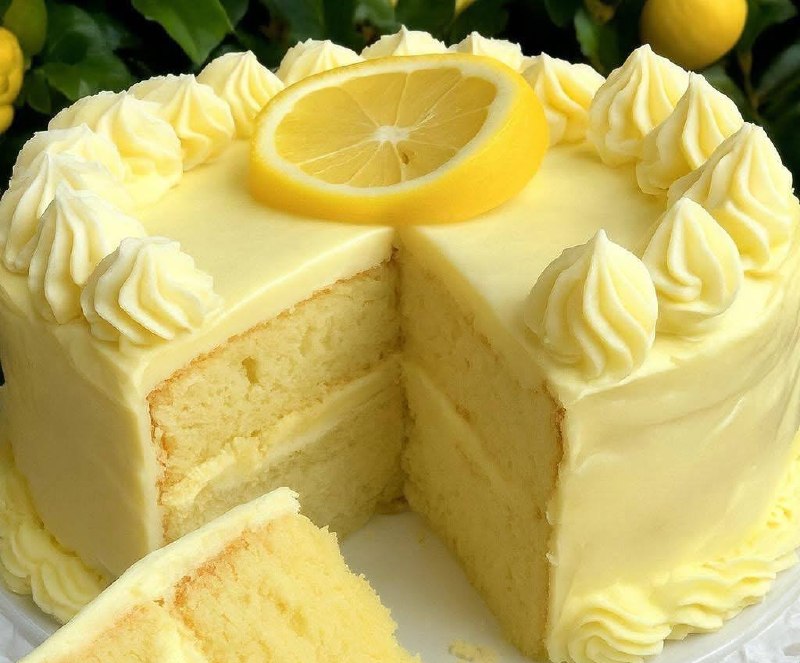
This recipe delivers on both flavor and presentation. The vibrant lemon zest speckling the cake, the smooth, creamy cheesecake layer, and the elegant frosting with its delicate piped details and fresh lemon garnish all contribute to a dessert that looks as incredible as it tastes. It’s a celebration of all things lemon, designed to impress and satisfy even the most discerning dessert lovers.
Nutritional Information
Per serving (approximate values):
- Calories: 680
- Protein: 9g
- Carbohydrates: 85g
- Fat: 35g
- Fiber: 2g
- Sodium: 420mg
Ingredients
For the Lemon Cake Layers:
- 2 ½ cups (300g) all-purpose flour, sifted
- 1 teaspoon baking powder
- ½ teaspoon baking soda
- ½ teaspoon salt
- 1 cup (226g) unsalted butter, softened
- 2 cups (400g) granulated sugar
- 4 large eggs, at room temperature
- 1 tablespoon lemon zest (from 2 medium lemons)
- ½ cup (120ml) fresh lemon juice
- 1 cup (240ml) buttermilk, at room temperature
- 1 teaspoon vanilla extract
For the Cheesecake Layer:
- 2 (8-ounce) packages (450g) cream cheese, softened
- ¾ cup (150g) granulated sugar
- 2 large eggs, at room temperature
- 1 tablespoon lemon zest
- 2 tablespoons fresh lemon juice
- 1 teaspoon vanilla extract
For the Lemon Cream Cheese Frosting:
- 1 cup (226g) unsalted butter, softened
- 1 (8-ounce) package (225g) cream cheese, softened
- 5 cups (600g) powdered sugar, sifted
- 2 tablespoons fresh lemon juice
- 1 tablespoon lemon zest
- 1 teaspoon vanilla extract
- Pinch of salt
For Garnish (Optional):
- Thinly sliced fresh lemons
- Additional lemon zest
Instructions
Prepare the Cheesecake Layer:
- Preheat oven to 325°F (160°C). Grease and flour a 9-inch springform pan.
- In a large bowl, using an electric mixer, beat the softened cream cheese and granulated sugar until smooth and creamy, about 2-3 minutes.
- Add the eggs one at a time, beating well after each addition until just combined. Do not overmix.
- Stir in the lemon zest, lemon juice, and vanilla extract until fully incorporated.
- Pour the cheesecake batter into the prepared springform pan.
- Place the springform pan inside a larger roasting pan. Fill the roasting pan with about 1 inch of hot water to create a water bath. This helps prevent cracks in the cheesecake.
- Bake for 45-55 minutes, or until the edges are set but the center still has a slight jiggle.
- Carefully remove the springform pan from the water bath. Let cool on a wire rack for 1 hour, then refrigerate for at least 4 hours, or preferably overnight, until thoroughly chilled and set. Once chilled, carefully remove the cheesecake from the springform pan and place on a flat plate or cutting board, then return to the refrigerator.
Prepare the Lemon Cake Layers:
- Preheat oven to 350°F (175°C). Grease and flour two 9-inch round cake pans, lining the bottoms with parchment paper.
- In a medium bowl, whisk together the sifted all-purpose flour, baking powder, baking soda, and salt. Set aside.
- In a large bowl, using an electric mixer, cream the softened unsalted butter and granulated sugar together until light and fluffy, about 3-5 minutes.
- Add the eggs one at a time, beating well after each addition. Scrape down the sides of the bowl as needed.
- Stir in the lemon zest and vanilla extract.
- In a separate small bowl, combine the fresh lemon juice and buttermilk.
- Gradually add the dry ingredients to the wet ingredients in three additions, alternating with the buttermilk mixture, beginning and ending with the dry ingredients. Mix on low speed until just combined after each addition. Do not overmix.
- Divide the batter evenly between the two prepared cake pans.
- Bake for 28-32 minutes, or until a wooden skewer inserted into the center comes out clean.
- Let the cake layers cool in the pans for 10-15 minutes before inverting them onto a wire rack to cool completely.
Prepare the Lemon Cream Cheese Frosting:
- In a large bowl, using an electric mixer, beat the softened unsalted butter and softened cream cheese together on medium speed until smooth and creamy, about 2-3 minutes.
- Gradually add the sifted powdered sugar, 1 cup at a time, beating on low speed until combined, then increasing to medium speed until smooth.
- Beat in the fresh lemon juice, lemon zest, vanilla extract, and pinch of salt until the frosting is light, fluffy, and well combined. Be careful not to overbeat, as this can make the frosting too soft.
Assemble the Lemon Cheesecake Cake:
- Once both cake layers are completely cool and the cheesecake layer is thoroughly chilled, level the cake layers with a serrated knife if necessary.
- Place one lemon cake layer on your serving plate or cake stand.
- Spread a thin layer of lemon cream cheese frosting over the top of the first cake layer.
- Carefully place the chilled cheesecake layer on top of the frosting.
- Spread another thin layer of lemon cream cheese frosting over the top of the cheesecake layer.
- Place the second lemon cake layer on top.
- Frost the entire cake with the remaining lemon cream cheese frosting, using an offset spatula to create a smooth finish.
- Optionally, use a piping bag fitted with a star tip to create decorative borders or swirls on top of the cake.
- Garnish with thinly sliced fresh lemons and additional lemon zest, if desired.
- Refrigerate the cake for at least 1 hour before serving to allow the frosting to set.
Cooking Tips and Variations
For the best results, ensure all your dairy ingredients, especially butter, cream cheese, and buttermilk, are at room temperature. This allows them to cream together smoothly, creating a more uniform batter and frosting without lumps. Cold ingredients can lead to a curdled appearance in your batter and a stiff, unspreadable frosting.
When baking the cheesecake, the water bath is crucial for preventing cracks and ensuring a creamy texture. It creates a humid environment in the oven, which helps the cheesecake bake evenly and slowly. Don’t overbake the cheesecake; it should still have a slight jiggle in the center when removed from the oven, as it will continue to set as it cools.
To achieve a perfectly moist cake, avoid overmixing the batter once the flour is added. Overmixing develops the gluten, leading to a tough, dry cake. Mix just until the ingredients are combined. Also, use a kitchen scale to measure your flour accurately, as scooping directly from the bag can compact it, resulting in too much flour.
For a beautiful, smooth frosting, sift your powdered sugar. This removes any lumps, ensuring a silky texture. Beat the butter and cream cheese until very light and fluffy before adding the sugar. If your frosting becomes too soft, refrigerate it for 15-20 minutes, then beat it again. If it’s too stiff, add a tiny bit of milk or cream, a teaspoon at a time, until it reaches the desired consistency.
Consider variations to this recipe to suit different tastes. For a lime cheesecake cake, you can substitute lime zest and juice for the lemon. An orange version would also be delightful. You can also add a thin layer of lemon curd between the cheesecake and cake layers for an extra burst of intense lemon flavor. For a slightly different texture, a graham cracker crust can be added to the bottom of the cheesecake layer before baking.
When assembling, chilling your cake layers and cheesecake layer thoroughly before frosting makes the process much easier and cleaner. Cold layers are less likely to tear or crumble, and the frosting will adhere better. Use an offset spatula for smooth frosting application, and a cake turntable can greatly simplify the frosting process.
Storage and Reheating
This Lemon Cheesecake Cake should be stored in an airtight container in the refrigerator. Due to the cream cheese in both the cheesecake layer and the frosting, it needs to be kept cold. When properly stored, the cake will remain fresh and delicious for up to 4-5 days.
If you have any leftovers, ensure they are covered tightly to prevent them from drying out or absorbing refrigerator odors. You can slice individual portions and store them in smaller airtight containers for easy access.
Reheating is generally not recommended for this type of cake. It is best enjoyed chilled or at room temperature. Allowing a slice to sit out for 15-20 minutes before serving will bring out the full flavor and soften the texture slightly, making it even more enjoyable. Do not microwave or heat the cake, as this will melt the frosting and alter the texture of the cheesecake and cake layers in an undesirable way.
Frequently Asked Questions
How do I prevent my cheesecake from cracking?
To prevent your cheesecake from cracking, it’s crucial to bake it in a water bath, as specified in the recipe. This provides a moist environment that helps the cheesecake bake evenly and reduces the risk of the top drying out and cracking. Also, avoid overbaking; the center should still have a slight jiggle when you remove it from the oven. Finally, allow the cheesecake to cool gradually, first on the counter and then in the refrigerator, to prevent sudden temperature changes that can cause cracks.
Can I make this cake gluten-free?
Yes, you can adapt this recipe to be gluten-free. For the cake layers, substitute the all-purpose flour with a high-quality gluten-free all-purpose flour blend that contains xanthan gum. Ensure your baking powder and baking soda are also gluten-free. The cheesecake layer and frosting are naturally gluten-free. Always double-check all your ingredient labels to ensure they are certified gluten-free if you have severe sensitivities.
Can I prepare parts of the cake in advance?
Absolutely! This cake is perfect for making in stages. The cheesecake layer can be baked and chilled up to 2-3 days in advance; in fact, it benefits from a longer chilling time. The cake layers can also be baked a day in advance, cooled completely, and then wrapped tightly in plastic wrap before storing at room temperature. The frosting can be made a day ahead and stored in an airtight container in the refrigerator, then re-whipped briefly before assembly. This staggered approach makes the overall baking process much more manageable.