

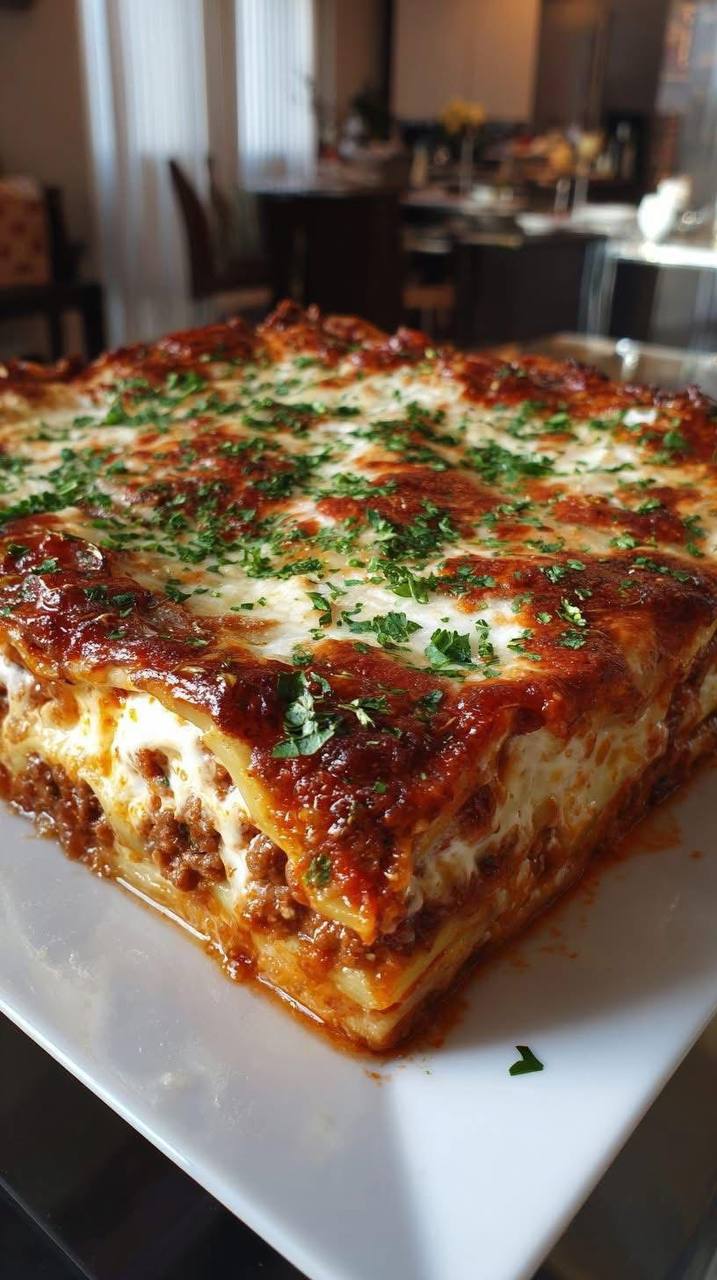
Prepare to be enchanted, because today we’re unveiling a recipe so rich, so deeply flavorful, and so utterly satisfying, it’s earned the moniker: Million Dollar Italian Lasagna. This isn’t just any lasagna; it’s a culinary masterpiece, a symphony of textures and tastes that will elevate your dinner table to a five-star dining experience. Forget everything you thought you knew about homemade lasagna, because this recipe takes the classic comfort food and transforms it into something truly extraordinary, making every bite feel like a luxurious indulgence.
What makes this lasagna a “million-dollar” sensation? It’s a harmonious blend of carefully selected, high-quality ingredients and a meticulous layering technique that ensures every forkful delivers a perfect balance of savory meat sauce, creamy ricotta, melting mozzarella, and tender pasta. We’ve cracked the code to prevent common lasagna pitfalls like dryness or excessive wateriness, ensuring a consistently moist, flavorful, and structurally sound dish. From the slow-simmered, rich meat ragù to the perfectly seasoned cheese filling and the beautifully browned, bubbling top, every element contributes to an unforgettable culinary journey that will have your guests asking for the recipe and your family begging for more.
This isn’t just a meal; it’s an event. The aroma alone, as it bakes to golden perfection, will fill your home with the promise of something truly special. It’s the kind of dish you bring out for celebrations, for comforting loved ones, or simply when you want to treat yourself to an unparalleled taste experience. Get ready to create a lasagna that not only tastes like a million bucks but also makes you feel like a million bucks for serving it.
Nutritional Information
Per serving (approximate values):
- Calories: 720
- Protein: 45g
- Carbohydrates: 55g
- Fat: 38g
- Fiber: 6g
- Sodium: 1100mg
Ingredients
- 1 tablespoon olive oil
- 1 pound ground beef (80/20 lean)
- 1 pound Italian sausage (mild or hot, casings removed)
- 1 large yellow onion, finely diced
- 4 cloves garlic, minced
- 1 (28-ounce) can crushed tomatoes
- 2 (15-ounce) cans tomato sauce
- 1 (6-ounce) can tomato paste
- 1/2 cup dry red wine (optional, but highly recommended for depth)
- 1/4 cup fresh basil, chopped
- 1 tablespoon dried oregano
- 1 teaspoon dried thyme
- 1 teaspoon sugar (to balance acidity)
- 1 teaspoon salt, or to taste
- 1/2 teaspoon black pepper, or to taste
- 12-15 lasagna noodles (oven-ready or traditional, cooked al dente if traditional)
- 32 ounces whole milk ricotta cheese, well-drained
- 1 large egg
- 1/2 cup grated Parmesan cheese, plus more for topping
- 1/4 cup fresh parsley, chopped, plus more for garnish
- 1/2 teaspoon salt
- 1/4 teaspoon black pepper
- 1 pound (about 4 cups) shredded mozzarella cheese, divided
- 1/4 cup grated Pecorino Romano cheese (optional, for extra sharpness)
Instructions
- Prepare the Meat Sauce: Heat olive oil in a large, heavy-bottomed pot or Dutch oven over medium-high heat. Add ground beef and Italian sausage, breaking it up with a spoon. Cook until browned, about 8-10 minutes. Drain off any excess fat.
- Add diced onion to the pot and cook until softened, about 5-7 minutes. Stir in minced garlic and cook for another minute until fragrant.
- Pour in the dry red wine (if using) and bring to a simmer, scraping up any browned bits from the bottom of the pot. Cook until the wine has mostly evaporated, about 3-5 minutes.
- Stir in crushed tomatoes, tomato sauce, and tomato paste. Add fresh basil, dried oregano, dried thyme, sugar, 1 teaspoon salt, and 1/2 teaspoon black pepper. Bring the sauce to a gentle simmer, then reduce heat to low, cover, and let it cook for at least 1.5 to 2 hours, stirring occasionally. The longer it simmers, the deeper the flavor. Taste and adjust seasonings as needed.
- Prepare the Ricotta Mixture: While the sauce simmers, prepare the cheese filling. In a large bowl, combine the well-drained ricotta cheese, egg, 1/2 cup grated Parmesan cheese, 1/4 cup chopped fresh parsley, 1/2 teaspoon salt, and 1/4 teaspoon black pepper. Mix thoroughly until all ingredients are well combined and smooth.
- Cook Lasagna Noodles (if using traditional): If you are not using oven-ready lasagna noodles, cook them according to package directions until al dente. Drain well and lay them out on parchment paper or a clean surface to prevent sticking.
- Preheat Oven and Prepare Dish: Preheat your oven to 375°F (190°C). Lightly grease a 9×13-inch baking dish.
- Assemble the Lasagna:
- Spread a thin layer of meat sauce (about 1 cup) on the bottom of the prepared baking dish.
- Arrange a single layer of lasagna noodles over the sauce, slightly overlapping if necessary. (Usually 3-4 noodles per layer).
- Spread half of the ricotta cheese mixture evenly over the noodles.
- Sprinkle about 1.5 cups of shredded mozzarella cheese over the ricotta.
- Spoon about 2 cups of meat sauce over the mozzarella layer.
- Place another layer of lasagna noodles on top of the sauce.
- Spread the remaining half of the ricotta cheese mixture evenly over the noodles.
- Sprinkle another 1.5 cups of shredded mozzarella cheese over the ricotta.
- Spoon the remaining meat sauce over the mozzarella.
- Place the final layer of lasagna noodles on top.
- Sprinkle the remaining 1 cup of shredded mozzarella cheese and the optional Pecorino Romano cheese evenly over the top.
- Bake the Lasagna: Cover the baking dish tightly with aluminum foil (you can lightly spray the underside of the foil with cooking spray to prevent cheese from sticking).
- Bake for 30 minutes.
- Remove the foil and continue baking for another 20-25 minutes, or until the top is golden brown and bubbly. If you want a more deeply browned and crispy top, you can turn on the broiler for the last 2-3 minutes, watching carefully to prevent burning.
- Rest and Serve: Once baked, remove the lasagna from the oven and let it rest for at least 15-20 minutes before slicing and serving. This allows the layers to set and prevents it from falling apart. Garnish with fresh parsley before serving.
Cooking Tips and Variations
To truly achieve that “million-dollar” taste, the quality of your ingredients matters. Opt for good quality canned tomatoes, ideally San Marzano, for the sauce. If possible, use freshly grated Parmesan and Pecorino Romano cheese, as pre-grated cheeses often contain anti-caking agents that can affect texture and flavor. For an even richer meat sauce, consider adding a splash of heavy cream or a tablespoon of butter at the end of its simmer. Don’t rush the sauce; the longer it simmers, the more complex and developed its flavors will become. A low and slow cook time is key here. To prevent watery lasagna, ensure your ricotta cheese is thoroughly drained. You can place it in a colander lined with cheesecloth and let it sit for at least 30 minutes, or even overnight in the refrigerator. If using traditional noodles, cook them slightly under al dente as they will continue to cook in the oven. For a vegetarian variation, you can omit the meat and instead use a medley of finely diced vegetables like zucchini, mushrooms, bell peppers, and spinach, sautéed before adding to the tomato sauce base. For a spicier kick, add a pinch of red pepper flakes to the meat sauce. You can also experiment with different cheese combinations, such as adding provolone or fontina to the mozzarella and ricotta mixture for more nuanced flavor profiles. For an extra creamy texture, some chefs blend a small amount of béchamel sauce into their meat sauce or use it as an additional layer. However, this recipe focuses on a more traditional, ricotta-based creaminess. When layering, ensure each layer is evenly spread to guarantee a balanced bite in every slice. Don’t be afraid to press down gently on the noodles as you layer to remove air pockets and create a more cohesive lasagna.
Storage and Reheating
This Million Dollar Italian Lasagna tastes even better the next day as the flavors have more time to meld. To store leftovers, allow the lasagna to cool completely. Cut into individual portions or leave in the baking dish. Cover tightly with plastic wrap and then aluminum foil, or transfer to airtight containers. It will keep in the refrigerator for up to 3-4 days. For longer storage, lasagna freezes exceptionally well. Once cooled, cut into individual servings and wrap each piece tightly in plastic wrap, then in aluminum foil. Place the wrapped portions in a freezer-safe bag or container. It can be stored in the freezer for up to 2-3 months. To reheat individual portions from the refrigerator, place a slice on a microwave-safe plate and heat on medium power for 2-4 minutes, or until heated through. Alternatively, cover with foil and reheat in an oven at 350°F (175°C) for 20-25 minutes. If reheating from frozen, it’s best to thaw overnight in the refrigerator first. Then, reheat in the oven at 350°F (175°C) covered with foil for 30-40 minutes, or until heated through, removing the foil for the last 10 minutes to crisp the top. Ensure the internal temperature reaches 165°F (74°C). Reheating a whole frozen lasagna will take significantly longer, potentially 1.5-2 hours covered, followed by 15-20 minutes uncovered.
Frequently Asked Questions
Can I make this lasagna ahead of time?
Absolutely! Lasagna is an excellent make-ahead meal. You can assemble the entire lasagna, cover it tightly with plastic wrap and foil, and refrigerate it for up to 24 hours before baking. When ready to bake, let it sit at room temperature for about 30 minutes before placing it in the preheated oven, and add an additional 10-15 minutes to the baking time.
What if my lasagna turns out watery?
Watery lasagna is often caused by undrained ricotta cheese or too much sauce. Ensure you drain your ricotta thoroughly. Also, make sure your meat sauce isn’t too thin; let it simmer uncovered for a bit longer if it seems overly liquid. Using oven-ready noodles can also help absorb excess moisture, but if using traditional, ensure they are cooked al dente and well-drained.
Can I use different types of meat in the sauce?
Yes, you can customize the meat sauce to your preference. A classic combination is ground beef and Italian sausage, but you can also use ground pork, veal, or even a mix of all three. For a lighter option, ground turkey can be used, though it might yield a slightly less rich flavor profile.
How do I get that perfectly browned, bubbly cheese top?
The key to a beautiful, golden-brown cheese top is to remove the foil for the last 20-25 minutes of baking. If it’s not quite golden enough after that, you can briefly place the lasagna under the broiler for 2-3 minutes. Watch it very closely during this time, as cheese can go from perfectly golden to burnt in a matter of seconds.