

Introduction
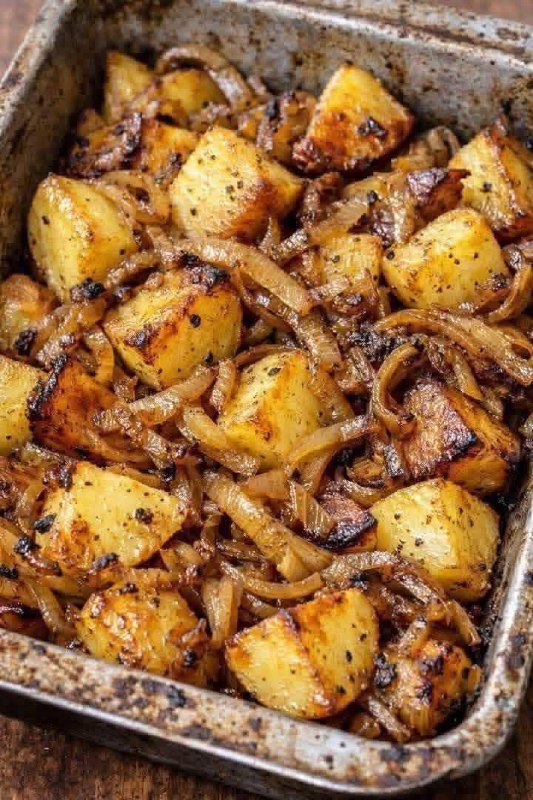
Prepare to fall in love with a dish that embodies comfort, simplicity, and an explosion of sweet and savory flavors: Roasted Potatoes with Caramelized Onions. This humble yet incredibly satisfying creation takes everyday ingredients and transforms them into a side dish so delicious, it often steals the show. Imagine perfectly golden, crispy-edged potatoes, tender on the inside, mingling with deeply sweet, jammy caramelized onions. It’s a symphony of textures and tastes that will have everyone asking for seconds.
What makes this dish so universally appealing? It’s the magical transformation that occurs when potatoes meet high heat and onions are coaxed to release their hidden sugars through slow cooking. The result is a profoundly flavorful experience that feels both rustic and elegant. Whether you’re looking for the ideal accompaniment to a holiday roast, a simple weeknight dinner, or even a satisfying vegetarian main, these roasted potatoes with caramelized onions fit the bill perfectly. And the best part? Despite their gourmet appeal, this recipe is surprisingly easy to follow, making it accessible for home cooks of all skill levels.
This recipe isn’t just about combining two ingredients; it’s about mastering a few simple techniques that elevate them to their highest potential. We’ll guide you through achieving that coveted crispy potato exterior and the rich, complex sweetness of perfectly caramelized onions. Get ready to impress your taste buds and your dinner guests with this truly remarkable and utterly addictive dish that promises to become a staple in your culinary repertoire.
Nutritional Information
Per serving (approximate values):
- Calories: 320
- Protein: 5g
- Carbohydrates: 45g
- Fat: 15g
- Fiber: 6g
- Sodium: 480mg
Ingredients
- 2 lbs Yukon Gold potatoes, peeled and cut into 1-inch cubes
- 2 large yellow onions, thinly sliced
- 3-4 tablespoons olive oil, divided
- 1 teaspoon salt, plus more to taste
- 1/2 teaspoon black pepper, plus more to taste
- 1/2 teaspoon dried thyme (optional)
- 1/4 cup vegetable broth or water (for caramelizing onions, optional)
- 1 teaspoon balsamic vinegar (optional, for caramelized onions)
- Fresh parsley or chives, chopped (for garnish, optional)
Instructions
- Prepare the Potatoes: Preheat your oven to 400°F (200°C). In a large bowl, toss the cubed potatoes with 2 tablespoons of olive oil, 1 teaspoon of salt, 1/2 teaspoon of black pepper, and the dried thyme (if using). Ensure the potatoes are evenly coated with oil and spices.
- Roast the Potatoes: Spread the seasoned potatoes in a single layer on a large baking sheet. Do not overcrowd the pan; use two baking sheets if necessary to ensure even roasting and crispiness. Roast for 20-25 minutes, then flip the potatoes and continue roasting for another 20-25 minutes, or until golden brown and tender on the inside, with crispy edges.
- Start Caramelizing Onions: While the potatoes are roasting, heat the remaining 1-2 tablespoons of olive oil in a large, heavy-bottomed skillet or Dutch oven over medium-low heat. Add the thinly sliced onions and a pinch of salt. Stir to coat the onions with oil.
- Slow Cook the Onions: Cook the onions slowly, stirring occasionally, for 30-45 minutes. The key here is patience and low heat. The onions will gradually soften, turn translucent, and then deepen in color to a rich golden brown. If they start to stick to the bottom of the pan, add a splash of vegetable broth or water to deglaze and scrape up any browned bits. Continue cooking until they are deeply caramelized and jammy.
- Enhance Onion Flavor (Optional): Towards the end of the caramelizing process, you can stir in 1 teaspoon of balsamic vinegar for an extra layer of sweetness and tang.
- Combine and Serve: Once the potatoes are perfectly roasted and the onions are beautifully caramelized, transfer the roasted potatoes to the skillet with the onions. Gently toss everything together to combine, ensuring the potatoes are coated with the sweet onions.
- Final Seasoning and Garnish: Taste and adjust seasoning with additional salt and pepper if needed. Garnish with fresh chopped parsley or chives, if desired. Serve hot.
Cooking Tips and Variations
Achieving the perfect roasted potatoes and deeply caramelized onions requires a little attention to detail, but the payoff is immense. Here are some tips to ensure your dish is spectacular every time:
- Potato Choice: While Yukon Gold potatoes are recommended for their creamy interior and crisp exterior, red potatoes or even Russet potatoes can work. For Russets, you might want to soak them in cold water for 30 minutes before roasting to remove excess starch, then pat them completely dry for extra crispiness.
- Don’t Overcrowd the Pan: This is perhaps the most crucial tip for crispy roasted potatoes. If potatoes are too close together, they steam rather than roast, resulting in a soggy texture. Use two baking sheets if necessary, ensuring a single layer with space between the potato pieces.
- High Heat for Potatoes: High oven temperatures are essential for achieving that desirable crispy crust on your potatoes. Don’t be tempted to lower the temperature.
- Patience with Onions: Caramelizing onions is a slow process, but it’s where much of the dish’s flavor comes from. Resist the urge to rush it by increasing the heat. Low and slow is the mantra here. The longer they cook at a gentle heat, the sweeter and more complex their flavor becomes.
- Deglazing for Flavor: If your onions start to stick or develop dark spots too quickly, add a tablespoon or two of vegetable broth or water to the pan. Scrape up any browned bits from the bottom of the pan; these are packed with flavor.
- Add Aromatics: For an extra layer of flavor, toss a few smashed garlic cloves with the potatoes during roasting. Fresh herbs like rosemary sprigs or thyme sprigs can also be added to the roasting pan for the last 15-20 minutes.
- Sweetness Boost: A tiny pinch of sugar (about 1/2 teaspoon) added to the onions at the beginning of caramelization can help kickstart the browning process and enhance sweetness. The balsamic vinegar addition at the end also provides a delightful tang and deepens the color.
- For a Richer Flavor: Consider using a combination of olive oil and butter for caramelizing the onions. Butter adds a nutty richness that complements the onions beautifully.
- Spice it Up: Feel free to experiment with other spices. A touch of paprika, a pinch of cayenne for subtle heat, or even a dash of garlic powder can add interesting dimensions to the potatoes.
- Cheesy Variation: For an indulgent twist, sprinkle some grated Parmesan cheese over the potatoes during the last 10 minutes of roasting. The cheese will melt and crisp up, adding a savory, salty crunch.
- Make Ahead Onions: Caramelized onions can be made a day or two in advance and stored in an airtight container in the refrigerator. This can speed up the preparation time on the day you plan to serve the dish.
Storage and Reheating
Roasted potatoes with caramelized onions are best enjoyed fresh, but leftovers can be stored and reheated while still maintaining much of their deliciousness. Proper storage and reheating techniques will help preserve their flavor and texture.
- Storage: Allow the dish to cool completely to room temperature before storing. Transfer the roasted potatoes and caramelized onions to an airtight container. They can be stored in the refrigerator for up to 3-4 days.
- Freezing: While possible, freezing is not highly recommended for this dish. The potatoes can become mealy and the onions may lose some of their texture upon thawing. If you must freeze, store in an airtight, freezer-safe container for up to 1 month. Thaw overnight in the refrigerator before reheating.
- Reheating in the Oven (Recommended): This is the best method for reheating as it helps to restore some of the crispiness to the potatoes. Preheat your oven to 350°F (175°C). Spread the leftovers in a single layer on a baking sheet. Reheat for 15-20 minutes, or until heated through and the potatoes are slightly crispy again. Stir halfway through for even heating.
- Reheating on the Stovetop: Heat a skillet over medium heat. Add the leftovers and stir frequently, breaking up any clumps, until heated through and lightly crisped. This method is quicker but may not get the potatoes as uniformly crispy as the oven.
- Reheating in the Microwave: While convenient, the microwave is generally not recommended for reheating this dish as it can make the potatoes soft and mushy. If you choose this method, heat in short intervals, stirring occasionally, until warm. The texture will not be ideal.
Frequently Asked Questions
What kind of potatoes are best for roasting?
For roasted potatoes, waxy or all-purpose potatoes like Yukon Gold, red potatoes, or new potatoes are generally preferred. They hold their shape well, develop a creamy interior, and crisp up nicely on the outside. While Russet potatoes can be used, they tend to be a bit drier and fluffier, and soaking them in cold water before roasting is recommended to remove excess starch for a crispier result.
How do I know when the onions are perfectly caramelized?
Perfectly caramelized onions will have a deep golden to rich brown color, a soft and jammy texture, and a profoundly sweet, umami flavor. They should no longer taste pungent or raw. The process typically takes 30-45 minutes (sometimes even longer for a very deep caramelization) over low to medium-low heat, with frequent stirring. Patience is key; don’t rush the process by turning up the heat too high, as this will burn them rather than caramelize them.
Can I prepare parts of this dish in advance?
Yes, you can definitely prepare the caramelized onions in advance. They can be made up to 2-3 days ahead of time and stored in an airtight container in the refrigerator. This significantly cuts down on the day-of cooking time. You can also cube the potatoes a few hours ahead of time and store them in cold water in the refrigerator, draining and thoroughly patting them dry just before roasting.
What are some good main dishes to serve with roasted potatoes and caramelized onions?
This versatile side dish pairs wonderfully with a wide variety of main courses. It’s excellent with roasted chicken, pan-seared steak, grilled pork chops, or lamb. For a vegetarian meal, it can be served alongside a hearty lentil loaf, a baked frittata, or even simply with a fresh green salad for a light yet satisfying dinner. Its sweet and savory profile makes it a fantastic accompaniment to almost any protein.