

Introduction
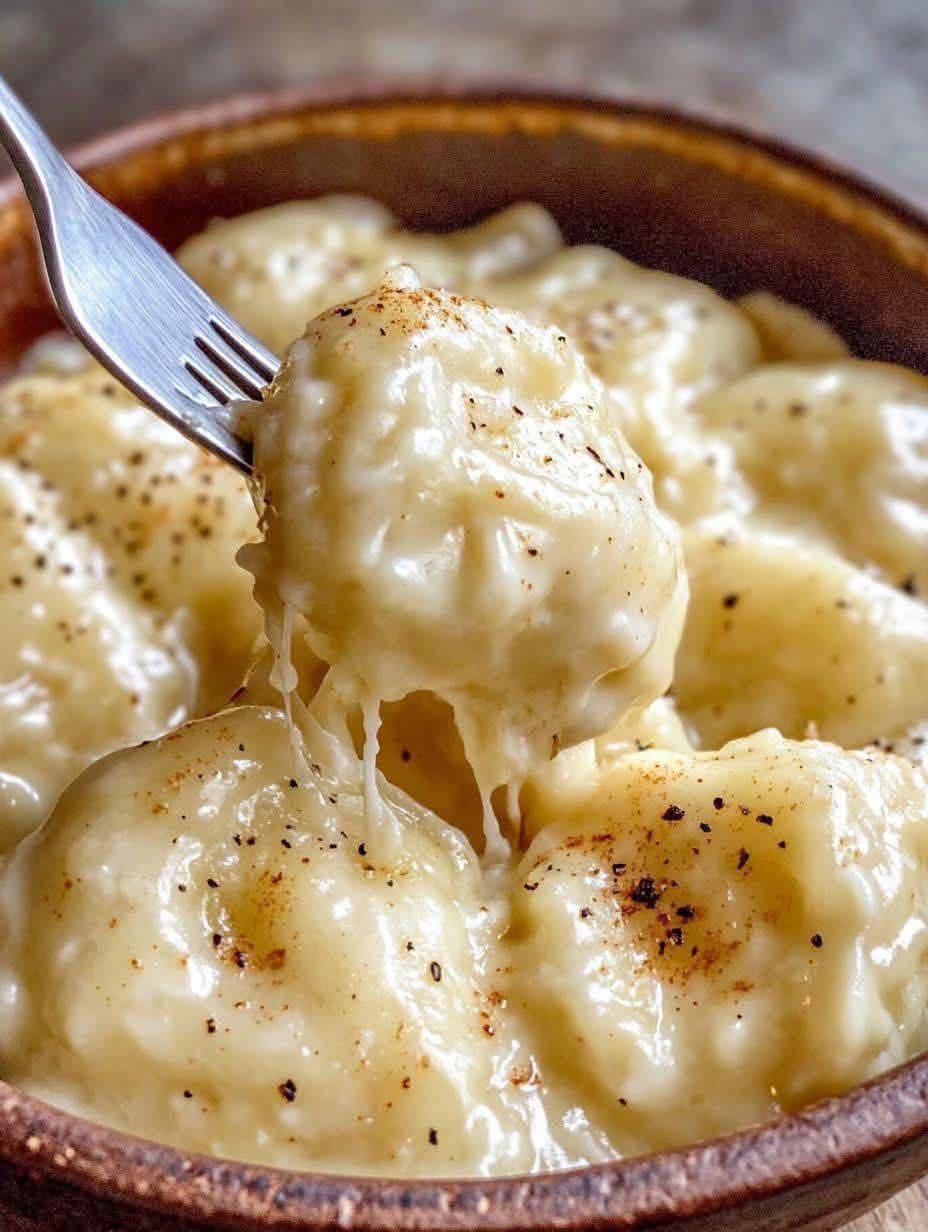
Prepare to fall in love with the ultimate comfort food experience: Cheesy Potato Dumplings in Cream Sauce. This dish is a warm hug in a bowl, a symphony of soft, pillowy potato dumplings generously coated in a rich, velvety cream sauce, and bursting with cheesy goodness. It’s the kind of meal that instantly transports you to a cozy kitchen, perfect for chilly evenings or whenever you crave something deeply satisfying and utterly delicious.
These aren’t just any potato dumplings; they’re infused with cheese, making each bite an explosion of flavor and texture. If you’re a fan of gnocchi, pierogi, or any hearty, potato-based dish, you’re in for a treat. This recipe takes the humble potato and transforms it into an elegant yet approachable meal that’s surprisingly easy to make from scratch. Get ready to impress your taste buds and those of your loved ones with this incredible, soul-warming creation.
The magic lies in the contrast: the tender, slightly chewy dumplings, the luxurious, savory cream sauce, and the subtle kick of pepper that ties it all together. It’s a dish that feels gourmet but is rooted in simple, wholesome ingredients. Whether you’re looking for a show-stopping main course or a decadent side, these cheesy potato dumplings are guaranteed to become a new favorite in your culinary repertoire. Let’s dive into creating this irresistible dish!
Nutritional Information
Per serving (approximate values):
- Calories: 680
- Protein: 25g
- Carbohydrates: 60g
- Fat: 38g
- Fiber: 5g
- Sodium: 850mg
Ingredients
For the Cheesy Potato Dumplings:
- 2 lbs Russet potatoes, peeled and quartered
- 1 cup shredded sharp cheddar cheese (or a blend of cheddar and mozzarella)
- 1 large egg, lightly beaten
- 1/2 teaspoon salt
- 1/4 teaspoon black pepper
- 1/4 teaspoon garlic powder
- 1 1/2 to 2 cups all-purpose flour, plus more for dusting
For the Cream Sauce:
- 4 tablespoons unsalted butter
- 3 cloves garlic, minced
- 1/4 cup all-purpose flour
- 2 cups whole milk, warmed
- 1 cup heavy cream
- 1/2 cup grated Parmesan cheese
- 1/4 cup shredded Gruyere or mozzarella cheese (optional, for extra cheesiness)
- 1/2 teaspoon salt, or to taste
- 1/4 teaspoon black pepper, or to taste
- Pinch of nutmeg (optional)
For Garnish:
- Fresh parsley or chives, chopped
- Extra black pepper
Instructions
Part 1: Making the Cheesy Potato Dumplings
- Cook the Potatoes: Place the peeled and quartered Russet potatoes in a large pot. Cover with cold, salted water and bring to a boil. Reduce heat and simmer until the potatoes are very tender and easily pierced with a fork, about 15-20 minutes.
- Drain and Mash: Drain the cooked potatoes thoroughly. Return them to the hot pot over low heat for a minute or two to evaporate any excess moisture. This is crucial for a good dumpling texture. Mash the potatoes until smooth, ensuring there are no lumps. You can use a potato ricer for the smoothest results. Let them cool slightly, about 10-15 minutes.
- Combine Ingredients: Transfer the mashed potatoes to a large bowl. Add the shredded cheddar cheese, beaten egg, salt, black pepper, and garlic powder. Mix gently until just combined.
- Add Flour: Gradually add 1 1/2 cups of flour to the potato mixture, mixing with your hands until a soft, slightly sticky dough forms. Avoid overworking the dough, as this can make the dumplings tough. If the dough is too sticky to handle, add the remaining 1/2 cup of flour, one tablespoon at a time, until it’s pliable but still soft.
- Shape the Dumplings: Lightly flour a clean work surface. Divide the dough into 4-5 equal portions. Roll each portion into a long rope, about 3/4 to 1 inch in diameter.
- Cut the Dumplings: Using a knife or a bench scraper, cut the ropes into 1-inch pieces. You can leave them as is, or gently press a fork onto one side of each dumpling to create ridges, which helps hold the sauce.
- Boil the Dumplings: Bring a large pot of salted water to a gentle boil. Working in batches, carefully drop the dumplings into the boiling water. Do not overcrowd the pot.
- Cook Until Floats: The dumplings are cooked when they float to the surface, usually after 3-5 minutes. Once they float, let them cook for an additional 1-2 minutes to ensure they are cooked through.
- Remove and Drain: Using a slotted spoon, carefully remove the cooked dumplings from the water and transfer them to a plate or baking sheet. Drizzle lightly with olive oil to prevent sticking while you finish the rest.
Part 2: Making the Cream Sauce
- Melt Butter and Sauté Garlic: In a large skillet or saucepan, melt the butter over medium heat. Add the minced garlic and cook for 1 minute until fragrant, being careful not to brown it.
- Make a Roux: Sprinkle the 1/4 cup of flour over the garlic and butter. Whisk constantly for 1-2 minutes to create a smooth roux. It should smell slightly nutty.
- Add Liquids: Gradually whisk in the warmed milk, a little at a time, ensuring no lumps form. Continue whisking until the sauce begins to thicken.
- Stir in Cream and Cheese: Pour in the heavy cream and bring the sauce to a gentle simmer, whisking occasionally. Reduce the heat to low. Stir in the Parmesan cheese and Gruyere (if using) until melted and smooth.
- Season the Sauce: Season the sauce with salt, black pepper, and a pinch of nutmeg (if desired). Taste and adjust seasonings as needed. The sauce should be rich, creamy, and well-seasoned.
Part 3: Combining and Serving
- Combine Dumplings and Sauce: Gently add the cooked potato dumplings to the cream sauce in the skillet. Toss gently to coat all the dumplings evenly.
- Serve: Serve immediately, garnished with fresh chopped parsley or chives and an extra grind of black pepper.
Cooking Tips and Variations
Choosing the Right Potatoes: For the best dumpling texture, always use starchy potatoes like Russets or Idaho potatoes. Their low moisture content and high starch content lead to light and fluffy dumplings that absorb less flour.
Don’t Overwork the Dough: When mixing the potato dough, handle it as little as possible. Overworking the dough develops the gluten in the flour, resulting in tough, rubbery dumplings. Mix until just combined.
Test a Dumpling: Before boiling the entire batch, cook one or two dumplings to test the consistency. If they fall apart, add a little more flour to the dough. If they are too dense, you might have added too much flour initially.
Prevent Sticking: When boiling dumplings, ensure the water is at a gentle simmer, not a rolling boil, to prevent them from breaking apart. Once removed from the water, a light drizzle of olive oil or a small pat of butter can prevent them from sticking together while you prepare the sauce.
Sauce Consistency: If your cream sauce is too thick, thin it out with a splash of warm milk or even a little bit of the dumpling cooking water. If it’s too thin, simmer it gently for a few more minutes to reduce, or make a very small slurry of cornstarch and cold water, then whisk it into the simmering sauce.
Cheese Variations: Feel free to experiment with different cheeses in both the dumplings and the sauce. Smoked gouda, fontina, or even a sharp provolone can add wonderful depth. For the dumplings, a good melting cheese like mozzarella or Monterey Jack works well. In the sauce, Parmesan is key, but adding a touch of cream cheese can make it even richer.
Herb Infusion: For an extra layer of flavor, infuse your cream sauce with fresh herbs. Add a sprig of thyme or rosemary to the milk as it warms, then remove before adding to the roux. A bay leaf can also add a nice subtle flavor.
Spicy Kick: If you like a little heat, add a pinch of red pepper flakes to the cream sauce along with the garlic.
Add-ins: Consider adding some sautéed mushrooms, spinach, or caramelized onions to the sauce for a more substantial meal.
Storage and Reheating
Storing Leftovers: Cooked Cheesy Potato Dumplings in Cream Sauce can be stored in an airtight container in the refrigerator for up to 3-4 days. It’s best to store the dumplings and sauce together, as the dumplings will absorb the sauce and remain moist.
Freezing Cooked Dumplings and Sauce: While you can freeze the cooked dish, the texture of the dumplings might become a little softer or gummier upon thawing and reheating. If you choose to freeze, store in a freezer-safe airtight container for up to 2-3 months. Thaw overnight in the refrigerator before reheating.
Freezing Uncooked Dumplings: For best results, freeze uncooked dumplings. Arrange them in a single layer on a parchment-lined baking sheet and freeze until solid (about 1-2 hours). Once frozen, transfer them to a freezer-safe bag or container. They can be stored for up to 3 months. Cook from frozen in boiling salted water, adding a few extra minutes to the cooking time until they float and are cooked through.
Reheating:
- Stovetop: The best way to reheat is on the stovetop. Transfer the leftovers to a saucepan over medium-low heat. Add a splash of milk or cream to loosen the sauce as it heats, stirring gently and frequently until warmed through. Be careful not to overheat, as this can cause the sauce to separate.
- Microwave: For individual portions, microwave on medium power, stirring every minute, until heated through. Add a tablespoon of milk or cream if the sauce appears too thick.
Frequently Asked Questions
What kind of potatoes are best for potato dumplings?
The best potatoes for potato dumplings are starchy varieties like Russet or Idaho potatoes. Their high starch content and low moisture make them ideal for creating light, fluffy, and tender dumplings that hold their shape well and don’t require excessive amounts of flour.
Can I make the dumpling dough ahead of time?
Yes, you can prepare the dumpling dough a few hours in advance. Once mixed, cover the dough tightly with plastic wrap and refrigerate. When you’re ready to use it, let it come to room temperature for about 15-20 minutes before shaping and cooking, as cold dough can be harder to work with.
My dumplings are falling apart in the water, what went wrong?
If your dumplings are falling apart, it usually means there isn’t enough flour in the dough to bind them properly, or the potatoes were too wet. Ensure your potatoes are thoroughly drained and mashed dry before adding other ingredients. You can try adding a tablespoon or two more flour to the remaining dough and gently re-kneading it before shaping and cooking.
How can I prevent the cream sauce from being too thick or too thin?
To prevent the sauce from being too thick, ensure you add the milk slowly, whisking constantly to incorporate it smoothly. If it becomes too thick, simply whisk in a little more warm milk or cream. If it’s too thin, you can simmer it gently for a few more minutes to allow it to reduce, or if you need a quicker fix, mix a small amount of cornstarch (1 teaspoon) with an equal amount of cold water to form a slurry, then whisk it into the simmering sauce until it thickens.