

Introduction
There’s something undeniably enchanting about a perfectly swirled Swiss Roll. Also known as a Jelly Roll, this classic dessert is a testament to simple elegance, combining a light-as-air sponge cake with a delightful, often fruity, filling. It’s a versatile treat that graces everything from casual afternoon teas to festive holiday tables, beloved for its beautiful spiral appearance and its melt-in-your-mouth texture. The Swiss Roll might look intricate, but the magic lies in a few key techniques that, once mastered, open up a world of delicious possibilities. It’s a comforting, nostalgic dessert that truly stands the test of time, appealing to both young and old with its delicate sweetness and charming presentation.
This recipe focuses on creating that ideal balance: a tender, pliable sponge that won’t crack when rolled, paired with a vibrant, flavorful jam filling that provides a lovely contrast. We’ll guide you through each crucial step, from whisking the eggs to achieve maximum volume to the gentle art of rolling the warm cake. The secret to a successful Swiss Roll isn’t in complex ingredients, but in careful handling and understanding the nuances of the baking and rolling process. This detailed guide ensures that even if you’re new to making rolled cakes, you’ll achieve a stunning and delicious result that looks like it came straight from a professional bakery.
Get ready to impress your friends and family with this visually stunning and incredibly tasty dessert. We’ll cover everything you need to know to bake, fill, and roll your way to Swiss Roll perfection, ensuring a beautiful spiral of cake and filling every time. The satisfaction of slicing into your homemade Swiss Roll and revealing that iconic swirl is truly unmatched!
Nutritional Information
Per serving (approximate values, based on 10 servings):
- Calories: 250 kcal
- Protein: 4g
- Carbohydrates: 45g
- Fat: 7g
- Fiber: 1g
- Sodium: 80mg
Ingredients
For the Sponge Cake:
- 4 large eggs, at room temperature
- 1/2 cup (100g) granulated sugar, plus 2 tablespoons for dusting
- 1/2 cup (60g) all-purpose flour, sifted
- 1 teaspoon baking powder
- 1/4 teaspoon salt
- 1 teaspoon vanilla extract
For the Filling:
- 1 cup (280g) high-quality strawberry or raspberry jam (or your preferred flavor)
For Dusting:
- 2 tablespoons powdered sugar
Instructions
- Preheat your oven to 375°F (190°C). Line a 10×15-inch (25×38 cm) jelly roll pan with parchment paper, leaving an overhang on the two longer sides to help with lifting. Lightly grease the parchment paper.
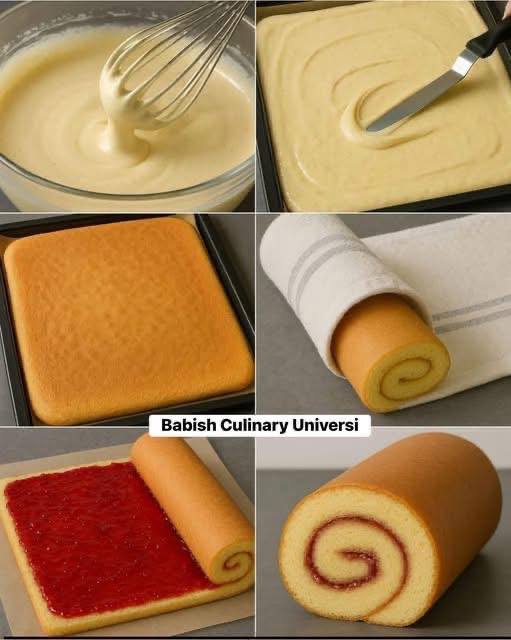
- In a large bowl, using an electric mixer, beat the eggs and 1/2 cup granulated sugar on high speed for 5-7 minutes, until the mixture is very pale, thick, and has tripled in volume. It should form a thick ribbon when the beaters are lifted. Beat in the vanilla extract.
- In a separate small bowl, whisk together the sifted flour, baking powder, and salt.
- Gradually add the dry ingredients to the egg mixture, folding gently with a spatula until just combined. Be careful not to overmix, as this can deflate the eggs and result in a dense cake.
- Pour the batter evenly into the prepared jelly roll pan. Use an offset spatula or the back of a spoon to spread the batter into an even layer, reaching all corners of the pan.
- Bake for 10-12 minutes, or until the cake is light golden brown, springs back when lightly touched, and a toothpick inserted into the center comes out clean. Do not overbake, as this can make the cake dry and prone to cracking.
- While the cake is baking, prepare for rolling. Lay a clean kitchen towel (or a fresh sheet of parchment paper) on a flat surface. Sprinkle the towel generously with 2 tablespoons of granulated sugar. This prevents sticking and adds a nice touch of sweetness.
- Immediately after removing the cake from the oven, invert the hot cake onto the prepared sugared towel. Carefully peel off the parchment paper that was on the bottom of the cake.
- Starting from one of the shorter ends, gently roll the warm cake and the towel together into a tight spiral. Place the rolled cake, seam-side down, on a wire rack and let it cool completely to room temperature, which will take about 1-2 hours. This crucial step allows the cake to set its “memory” in a rolled shape, preventing cracks when you unroll and fill it later.
- Once the cake is completely cool, carefully unroll it. If it resists, gently coax it open.
- Evenly spread the jam filling over the entire surface of the cake, leaving a small border (about 1/2 inch) around the edges.
- Starting from the same shorter end you began with, carefully re-roll the cake, this time without the towel, into a tight spiral. Be gentle to avoid squeezing out too much filling or cracking the cake.
- Transfer the rolled cake, seam-side down, to a serving platter. If desired, use a serrated knife to trim off the uneven ends for a neat, professional appearance.
- Dust the top of the Swiss Roll generously with powdered sugar before serving. Slice into individual portions and enjoy!
Cooking Tips and Variations
Use Room Temperature Eggs: This is paramount for achieving maximum volume when whipping, leading to a lighter, airier sponge. Cold eggs simply won’t whip up as well.
Don’t Overbake: Overbaking is the number one cause of a cracked Swiss Roll. The cake should be just set and lightly golden. Keep a close eye on it during the last few minutes of baking.
Roll While Warm: This cannot be stressed enough. Rolling the cake while it’s still warm and pliable allows it to “learn” its shape. If you wait until it’s cold, it will be stiff and crack when you try to roll it.
Dust with Sugar for Rolling: Dusting the towel or parchment with granulated sugar before the initial roll not only prevents sticking but also creates a slightly sweet, non-sticky exterior that’s pleasant to handle.
Gentle Handling: Sponge cakes are delicate. Treat your cake gently when spreading batter, peeling parchment, and especially during rolling and unrolling to prevent tears.
Filling Consistency: Your jam should be spreadable but not too runny, which could make the cake soggy, or too thick, which could make it hard to roll. If your jam is very thick, you can warm it slightly to make it more pliable. For a creamier filling, try whipped cream (stabilized with a little powdered sugar and vanilla) or a light buttercream. Chocolate ganache, lemon curd, or even a cream cheese frosting are also fantastic options. For a chocolate Swiss Roll, substitute 2 tablespoons of flour with 2 tablespoons of unsweetened cocoa powder.
Trimming for Presentation: Trimming the ends of the finished roll gives it a clean, professional look and showcases the beautiful spiral perfectly.
Storage and Reheating
Storage: Swiss Rolls are best enjoyed fresh, but they can be stored. If filled with jam, wrap the entire roll tightly in plastic wrap to prevent it from drying out. Store at room temperature for up to 2 days, or in the refrigerator for up to 4-5 days. If your filling contains dairy (like whipped cream or buttercream), it must be refrigerated.
Reheating: Swiss Rolls are generally not reheated. They are typically served at room temperature or chilled, depending on the filling. If refrigerated, allow the roll to sit at room temperature for 15-30 minutes before serving to soften the cake and enhance the flavors.
Frequently Asked Questions
Why did my Swiss Roll crack when I unrolled it?
The most common reasons for cracking are overbaking the cake, which makes it dry and brittle, or not rolling it while it was still warm. The initial warm roll sets the cake’s memory. If you let it cool completely flat, it will resist rolling later.
Can I use other fillings besides jam?
Absolutely! The versatility of the Swiss Roll is one of its best features. Popular alternatives include stabilized whipped cream, buttercream, chocolate ganache, lemon curd, or even cream cheese frosting. Ensure your chosen filling isn’t too wet, which can make the cake soggy, or too thick, which can make rolling difficult.
How can I prevent the cake from sticking to the towel/parchment during the initial roll?
Generously dusting your clean kitchen towel or fresh sheet of parchment paper with granulated sugar before inverting the hot cake onto it is key. The sugar creates a barrier that prevents sticking and makes peeling off the original parchment and the subsequent unrolling much easier.
My cake is tough, not light and airy. What went wrong?
A tough cake usually indicates that the batter was overmixed after the flour was added. Overmixing develops the gluten in the flour, leading to a dense and tough texture. Fold the dry ingredients into the whipped egg mixture gently and only until just combined to retain the airiness.