

Introduction
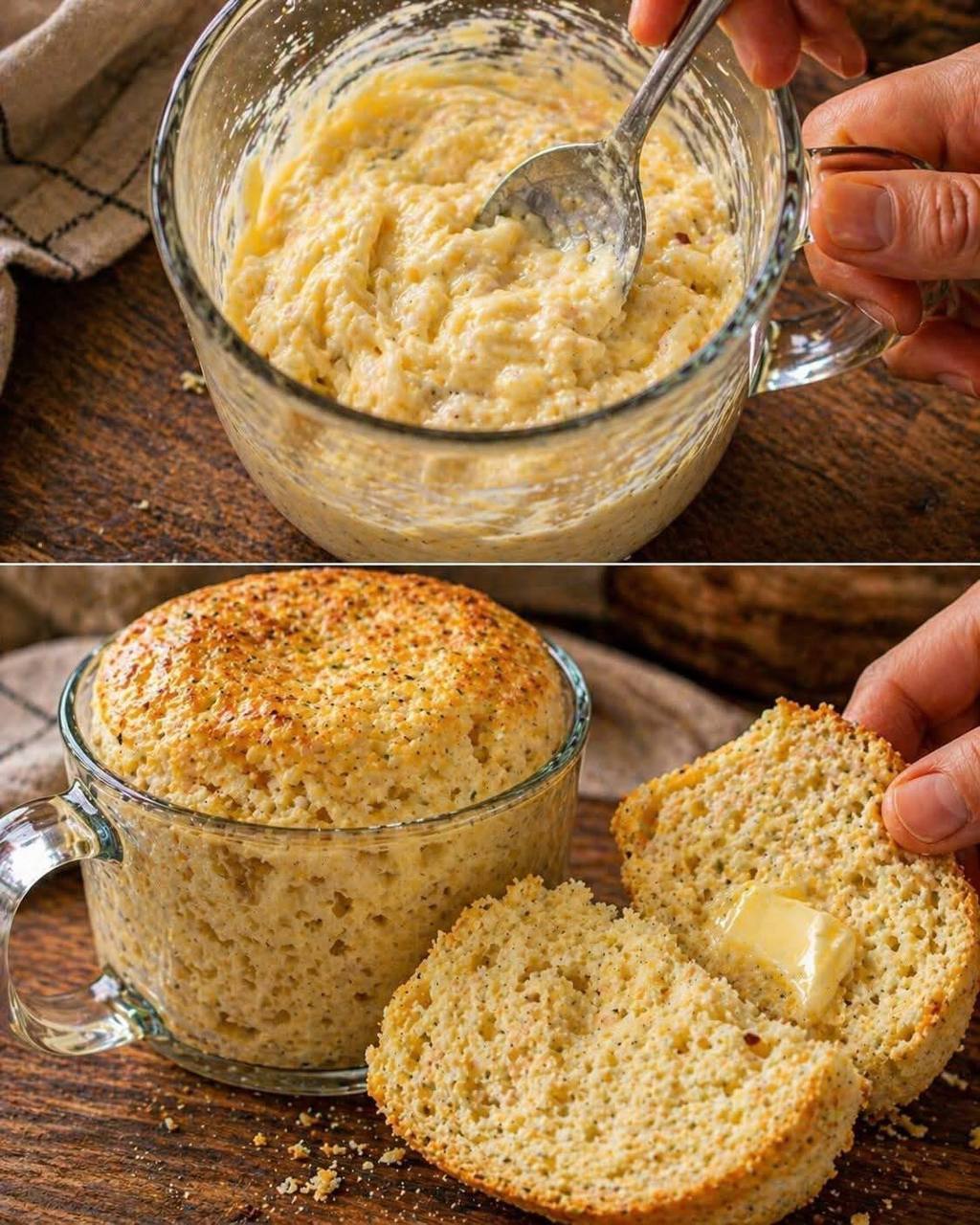
Craving a warm, comforting slice of bread but don’t have the time or energy for a full-blown baking project? Say hello to the Quick Microwave Mug Bread, your new best friend for instant gratification! This ingenious recipe delivers a perfectly portioned, fluffy, and delicious bread right in your microwave, making it an absolute game-changer for busy mornings, afternoon snacks, or even a last-minute side dish. Forget waiting for dough to rise or preheating an oven; this mug bread goes from pantry to plate in mere minutes.
Mug bread is exactly what it sounds like: a single serving of bread cooked in a mug. It’s a genius concept born from the need for speed and convenience, and it perfectly caters to those moments when you just need a little something warm and bready without all the fuss. Whether you’re living solo, trying to control portions, or simply in a hurry, this recipe offers a delightful solution. It’s incredibly versatile, allowing you to customize flavors to suit your mood, from subtly sweet to savory and herbaceous.
What makes this particular Quick Microwave Mug Bread special is its remarkable speed and simplicity. We’re talking about a recipe that requires minimal ingredients, basic kitchen equipment, and just a few minutes of your time. It’s significantly faster than traditional bread making and even quicker than many mug cake recipes. The result is a surprisingly tender and satisfying bread that can be enjoyed on its own or paired with your favorite spreads. Get ready to revolutionize your quick-fix cravings!
Nutritional Information
Per serving (approximate values):
- Calories: 280
- Protein: 8g
- Carbohydrates: 35g
- Fat: 12g
- Fiber: 2g
- Sodium: 280mg
Ingredients
- 4 tablespoons all-purpose flour
- 1/2 teaspoon baking powder
- Pinch of salt
- 1 tablespoon granulated sugar (optional, for a slightly sweet bread)
- 1 large egg
- 1 tablespoon milk (dairy or non-dairy)
- 1 tablespoon melted unsalted butter or neutral oil (like avocado or vegetable oil)
- Optional: 1/4 teaspoon vanilla extract (for sweet versions)
- Optional: 1/2 teaspoon poppy seeds (for topping)
Instructions
- Choose a microwave-safe mug that holds at least 12-14 ounces (about 1 1/2 to 2 cups) to prevent overflow. A wider mug is often better for even cooking.
- In the chosen mug, combine the dry ingredients: all-purpose flour, baking powder, pinch of salt, and granulated sugar (if using). Stir well with a small spoon or fork until thoroughly mixed. This step is crucial for even distribution of the leavening agent.
- Create a small well in the center of the dry ingredients. Crack the egg directly into the well. Add the milk, melted butter (or oil), and vanilla extract (if using).
- Using the same spoon or fork, gently mix all the ingredients together until a smooth batter forms. Be careful not to overmix; a few small lumps are acceptable, but you want to ensure there are no pockets of dry flour remaining. The batter should have a consistency similar to thick pancake batter.
- If desired, sprinkle the poppy seeds evenly over the top of the batter.
- Place the mug in the microwave. Cook on high power for 60-90 seconds. Microwave wattages vary significantly, so start with 60 seconds and check for doneness.
- To check if the bread is done, gently touch the top; it should spring back slightly. You can also insert a toothpick into the center; it should come out clean. If it’s still wet, continue microwaving in 10-15 second increments until cooked through. Be careful not to overcook, as this can make the bread dry and rubbery.
- Once cooked, carefully remove the hot mug from the microwave using oven mitts or a kitchen towel.
- Let the mug bread cool in the mug for 1-2 minutes. This allows it to set and makes it easier to remove.
- You can eat the bread directly from the mug, or carefully invert it onto a plate. Serve warm with your favorite toppings.
Cooking Tips and Variations
For the best results with your Quick Microwave Mug Bread, pay attention to these tips. Firstly, mug size truly matters. A mug that is too small will cause the batter to overflow, creating a mess and an unevenly cooked bread. Aim for a mug that is at least 12-14 ounces, or roughly 1.5 to 2 cups in capacity. A wider, shorter mug often yields a better texture than a tall, narrow one, as it allows for more even microwave penetration. Secondly, avoid overmixing the batter. Just like with traditional quick breads, overmixing can develop the gluten too much, leading to a tough and chewy texture. Mix until just combined, with no visible dry flour, even if a few small lumps remain. Thirdly, microwave wattage is inconsistent across different appliances. Your 800-watt microwave will cook differently than a 1200-watt one. Start with the lower end of the cooking time (e.g., 60 seconds) and add 10-15 second increments as needed. Overcooking is the quickest way to dry out your mug bread, turning it rubbery and unappetizing. The bread is done when it’s firm to the touch and a toothpick inserted into the center comes out clean.
The beauty of mug bread lies in its incredible versatility. You can easily adapt this basic recipe to create a myriad of flavors, both sweet and savory. For a delightful sweet treat, consider adding a tablespoon of chocolate chips, blueberries, or finely diced apple and a pinch of cinnamon to the batter. A drizzle of maple syrup or a sprinkle of powdered sugar after cooking can elevate it further. If you prefer a more decadent option, stir in a teaspoon of cocoa powder for a chocolate mug bread, or add a few drops of almond extract for a nutty flavor. For savory variations, omit the sugar and vanilla extract. Instead, mix in a tablespoon of shredded cheese (cheddar, Parmesan, or mozzarella work well), a pinch of garlic powder, and some dried herbs like oregano, basil, or chives. You could even fold in some crumbled cooked bacon or finely chopped sun-dried tomatoes. Another simple savory twist is to add everything bagel seasoning to the batter before microwaving. Always adjust the liquid slightly if adding many dry ingredients, to maintain the desired batter consistency. Remember, these are single-serving recipes, so don’t be afraid to experiment with small amounts of different flavorings until you find your perfect combination!
Storage and Reheating
While Quick Microwave Mug Bread is truly best enjoyed immediately after cooking, there are instances where you might have a small amount leftover, or you might want to make it slightly ahead of time for a very short window. If you do have leftovers, allow the mug bread to cool completely. Once cool, transfer it from the mug to an airtight container. It can be stored at room temperature for a few hours, but for optimal freshness and to prevent it from drying out, it’s best to store it in the refrigerator. In the fridge, it will last for up to 1 day. However, be aware that the texture will inevitably change and become denser and drier compared to when it’s fresh out of the microwave.
Reheating mug bread is possible, but it’s important to do so carefully to avoid making it even drier or rubbery. If you’re reheating from the refrigerator, place the mug bread back into a clean, microwave-safe mug or on a microwave-safe plate. Reheat on medium power for only 10-15 seconds. Check its warmth and texture. If it’s still cold, continue reheating in 5-second increments. The goal is to warm it through gently without cooking it further. Over-reheating will result in a very tough and chewy texture. Unfortunately, the light and fluffy texture of freshly made mug bread is difficult to fully restore upon reheating, so it’s always recommended to make this recipe fresh when possible.
Frequently Asked Questions
Why did my mug bread turn out rubbery or dry?
The most common reasons for a rubbery or dry mug bread are overcooking and overmixing. Microwaves vary significantly in power, so it’s crucial to start with the minimum suggested cooking time and add short bursts until done. Overmixing the batter can also develop the gluten too much, leading to a tough texture. Mix just until the ingredients are combined and no dry flour remains.
Can I make this recipe gluten-free?
Yes, you can! Substitute the all-purpose flour with a good quality 1:1 gluten-free baking flour blend that contains xanthan gum. The cooking time might remain similar, but always check for doneness with a toothpick. The texture might be slightly different, but it should still be delicious.
What if my mug bread overflows in the microwave?
If your mug bread overflows, it’s likely that your mug is too small for the amount of batter. Ensure you are using a microwave-safe mug with a capacity of at least 12-14 ounces (about 1.5 to 2 cups). You can also try slightly reducing the amount of batter by a tablespoon or two if you consistently have overflowing issues with your chosen mug.
Can I use oil instead of butter?
Absolutely! A neutral-flavored oil like avocado oil, vegetable oil, or light olive oil works perfectly as a substitute for melted butter in this recipe. It will provide the necessary moisture and richness without significantly altering the flavor, especially if you’re making a savory version.