

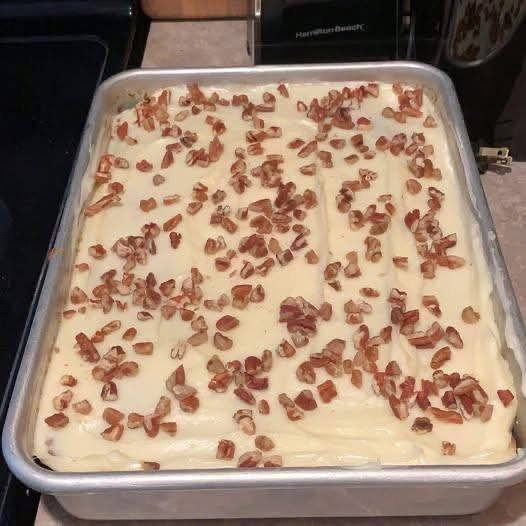
Carrot Cake Sheet Cake
Introduction
There are very few desserts that evoke the same sense of cozy comfort and wholesome indulgence as a classic carrot cake. Its rich, spiced flavor, incredibly moist crumb, and tangy cream cheese frosting have made it a perennial favorite for generations. But let’s be honest, while a towering layer cake is impressive, it can sometimes feel like a daunting task for the home baker. That’s where the humble yet mighty carrot cake sheet cake comes into play – offering all the beloved flavors and textures in a wonderfully convenient, crowd-pleasing format.
This Carrot Cake Sheet Cake recipe takes everything you adore about the traditional version and streamlines it into a simple, bake-and-serve pan. Perfect for potlucks, family gatherings, birthday parties, or just a Sunday afternoon treat, its ease of preparation makes it a go-to for any occasion. No finicky layering, no complex stacking – just a beautifully moist, flavorful cake that’s ready to be frosted and enjoyed by all. The uniform thickness ensures even baking and a consistent bite in every single piece, making it an absolute winner whether you’re serving a small group or a large crowd.
What makes this particular recipe stand out? It’s all about the perfect balance. We’re talking about a cake that’s incredibly moist without being dense, perfectly spiced without being overwhelming, and topped with a luscious, tangy cream cheese frosting that’s simply irresistible. The addition of toasted pecans not only provides a delightful crunch but also a depth of nutty flavor that complements the sweet carrots and warm spices beautifully. This isn’t just a cake; it’s a celebration of simple, delicious baking that brings smiles to every face.
Nutritional Information
Per serving (approximate values):
- Calories: 450
- Protein: 5g
- Carbohydrates: 55g
- Fat: 25g
- Fiber: 2g
- Sodium: 280mg
Ingredients
- For the Cake:
- 2 cups all-purpose flour
- 2 teaspoons baking soda
- 1 teaspoon salt
- 2 teaspoons ground cinnamon
- ½ teaspoon ground nutmeg
- ¼ teaspoon ground ginger
- 1 ½ cups granulated sugar
- ½ cup packed light brown sugar
- 1 cup vegetable oil (or other neutral oil like canola)
- 4 large eggs, at room temperature
- 2 teaspoons vanilla extract
- 3 cups finely grated carrots (about 4-5 medium carrots)
- 1 cup chopped pecans, plus extra for topping (optional)
- For the Cream Cheese Frosting:
- 8 ounces cream cheese, softened
- ½ cup unsalted butter, softened (1 stick)
- 4 cups powdered sugar, sifted
- 1 teaspoon vanilla extract
- ⅛ teaspoon salt
Instructions
- Prepare for Baking: Preheat your oven to 350°F (175°C). Grease and flour a 9×13 inch baking pan, or line with parchment paper allowing an overhang on the sides for easy removal.
- Combine Dry Ingredients: In a large bowl, whisk together the all-purpose flour, baking soda, salt, ground cinnamon, ground nutmeg, and ground ginger until well combined. Set aside.
- Combine Wet Ingredients: In a separate large bowl, whisk together the granulated sugar, light brown sugar, and vegetable oil until smooth.
- Add Eggs and Vanilla: Beat in the eggs one at a time, ensuring each is fully incorporated before adding the next. Stir in the vanilla extract.
- Combine Wet and Dry: Gradually add the dry ingredient mixture to the wet ingredients, mixing on low speed or by hand until just combined. Be careful not to overmix; a few streaks of flour are okay.
- Fold in Carrots and Pecans: Gently fold in the finely grated carrots and 1 cup of chopped pecans until evenly distributed throughout the batter.
- Bake the Cake: Pour the batter evenly into the prepared 9×13 inch baking pan.
- Bake Time: Bake for 30-35 minutes, or until a wooden skewer or toothpick inserted into the center of the cake comes out clean.
- Cool the Cake: Once baked, remove the cake from the oven and let it cool in the pan on a wire rack for at least 30 minutes. Then, carefully invert the cake onto the wire rack to cool completely before frosting. This is crucial for preventing the frosting from melting.
- Make the Cream Cheese Frosting: While the cake cools, prepare the frosting. In a large bowl, using an electric mixer, beat the softened cream cheese and softened butter together on medium speed until smooth and creamy, about 2-3 minutes.
- Add Remaining Frosting Ingredients: Gradually add the sifted powdered sugar, 1 cup at a time, beating on low speed until combined, then increasing to medium-high speed until light and fluffy. Beat in the vanilla extract and salt until fully incorporated.
- Frost the Cake: Once the cake is completely cool, spread the cream cheese frosting evenly over the top using an offset spatula or the back of a spoon.
- Garnish (Optional): If desired, sprinkle extra chopped pecans over the frosted cake for an extra flourish and delightful crunch.
- Serve and Enjoy: Slice and serve your delicious Carrot Cake Sheet Cake!
Cooking Tips and Variations
For the most moist and flavorful carrot cake, ensure your carrots are finely grated. While a box grater works, a food processor with a grating attachment makes quick work of this task. Don’t pack the grated carrots too tightly when measuring; allow them to be loose. Overmixing the batter can lead to a tough cake, so mix until just combined. A few lumps are perfectly fine. Always use room temperature eggs and cream cheese for the best results; cold ingredients don’t emulsify as well and can lead to a lumpy batter or frosting. To achieve a smooth, lump-free cream cheese frosting, make sure both your cream cheese and butter are thoroughly softened. If the frosting seems too thick, you can add a tiny splash of milk or cream, a teaspoon at a time, until it reaches your desired consistency. If it’s too thin, you can beat in a bit more sifted powdered sugar.
Want to switch things up? For an extra layer of flavor and texture, consider toasting your pecans before adding them to the batter and as a topping. Simply spread them on a baking sheet and bake at 350°F (175°C) for 5-7 minutes, or until fragrant. Let them cool completely before chopping. You can also experiment with other nuts like walnuts. For a touch of tropical sweetness, fold in ½ cup of drained crushed pineapple along with the carrots. If you enjoy a more intense spice profile, you can increase the amount of cinnamon, nutmeg, or ginger slightly, or even add a pinch of allspice or cloves. For a richer, darker cake, substitute half of the granulated sugar with dark brown sugar. If you’re feeling adventurous with the frosting, a hint of orange zest can elevate the cream cheese frosting, adding a bright, zesty counterpoint to the cake’s sweetness. For a gluten-free version, you can experiment with a 1:1 gluten-free baking flour blend, noting that baking times might vary slightly. Dairy-free cream cheese and butter alternatives can also be used for a dairy-free frosting, though the texture may differ slightly.
Storage and Reheating
To keep your Carrot Cake Sheet Cake fresh and delicious, it’s best stored in an airtight container in the refrigerator. Due to the cream cheese frosting, it should not be left at room temperature for extended periods. When stored properly, the cake will remain fresh for up to 3-4 days. While technically edible beyond that, the texture and moisture will start to decline. If you want to enjoy a slice, simply remove it from the refrigerator about 30 minutes before serving to allow the frosting and cake to come closer to room temperature. This will enhance the flavors and soften the frosting to its ideal creamy consistency. For longer storage, you can freeze individual slices or the whole unfrosted cake. To freeze frosted cake, place it in the freezer for about an hour until the frosting is firm. Then, wrap the cake tightly in plastic wrap, followed by aluminum foil, or place it in a freezer-safe container. It can be stored in the freezer for up to 2-3 months. Thaw frozen cake in the refrigerator overnight before bringing it to room temperature to serve. For unfrosted cake, wrap tightly and freeze, then thaw and frost when ready to serve.
Frequently Asked Questions
How do I prevent my carrot cake from being dry?
The key to a moist carrot cake lies in several factors: using oil instead of butter (oil keeps cakes moister longer), not overmixing the batter (which develops gluten and can make the cake tough), and most importantly, not overbaking. Start checking for doneness a few minutes before the recipe suggests, and remove the cake from the oven as soon as a toothpick inserted into the center comes out clean or with moist crumbs, but no wet batter.
Can I make this carrot cake ahead of time?
Absolutely! This carrot cake is an excellent make-ahead dessert. You can bake the cake a day or two in advance, let it cool completely, and then wrap it tightly in plastic wrap and store it at room temperature (or in the refrigerator if your kitchen is very warm). Prepare the cream cheese frosting the day you plan to serve, or up to a day in advance and store it in the refrigerator. If storing the frosting, let it come to room temperature and re-whip it for a minute or two before frosting the cake.
What’s the best way to grate carrots for this recipe?
For the best texture in your cake, finely grated carrots are ideal. A box grater’s small holes work perfectly, but for speed and convenience, a food processor fitted with the grating disc is a fantastic option. Avoid using pre-shredded carrots from the store, as they are often too thick and dry, which can impact the cake’s moisture and texture. Freshly grated carrots provide the best flavor and moisture content.
Why is my cream cheese frosting too runny or too stiff?
The consistency of your cream cheese frosting is often affected by the temperature of your ingredients. If the cream cheese or butter is too warm, the frosting will be runny. Ensure both are softened but still cool to the touch. If it’s too runny, you can try adding more sifted powdered sugar or chilling it in the refrigerator for 20-30 minutes before re-whipping. If it’s too stiff, your butter or cream cheese might have been too cold, or you added too much powdered sugar. You can try adding a tiny amount of milk or cream (half a teaspoon at a time) and beating until it reaches the desired consistency. Always use block cream cheese, not the spreadable kind, for best results.