

Introduction
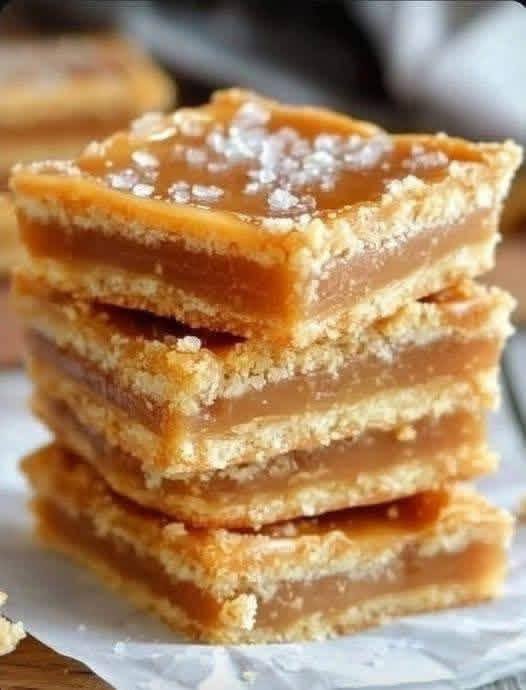
Prepare to surrender to the irresistible allure of our Decadent Salted Caramel Bars. These aren’t just any dessert bars; they are a symphony of sweet and salty, a testament to the magic that happens when rich, buttery caramel meets a crisp, shortbread crust, all crowned with a delicate sprinkle of flaky sea salt. Each bite offers a delightful contrast: the satisfying snap of the crust giving way to a luxuriously chewy, golden caramel that melts in your mouth, leaving behind that perfect hint of salinity.
The popularity of salted caramel has exploded for good reason, and these bars encapsulate everything that makes this flavor combination so beloved. They strike a harmonious balance, preventing the sweetness from becoming cloying and elevating the caramel to new heights. What makes our recipe truly special is the homemade caramel – a surprisingly achievable feat that yields a depth of flavor far superior to store-bought versions. While the term “decadent” might suggest complexity, you’ll be delighted to discover that crafting these beauties at home is more straightforward than you might imagine, producing a show-stopping treat perfect for any occasion.
These Decadent Salted Caramel Bars are an ideal indulgence for gifting, a sophisticated addition to a dessert spread, or simply a well-deserved treat for yourself. The textural interplay between the sturdy, buttery crust and the soft, yielding caramel is what truly elevates this dessert, making it an unforgettable experience that will have everyone reaching for a second slice.
Nutritional Information
Per serving (approximate values):
- Calories: 380
- Protein: 3g
- Carbohydrates: 50g
- Fat: 20g
- Fiber: 1g
- Sodium: 250mg
Ingredients
For the Shortbread Crust:
- 2 ¼ cups all-purpose flour
- ½ cup granulated sugar
- ¼ teaspoon salt
- 1 cup (2 sticks) unsalted butter, cold and cut into ½-inch cubes
For the Salted Caramel Filling:
- 1 cup (2 sticks) unsalted butter
- 1 cup light brown sugar, packed
- ½ cup granulated sugar
- ½ cup heavy cream
- 1 teaspoon vanilla extract
- ½ teaspoon sea salt (fine grain)
- 1-2 teaspoons flaky sea salt, for topping (such as Maldon)
Instructions
- Preheat your oven to 350°F (175°C). Line a 9×13-inch baking pan with parchment paper, leaving an overhang on the sides to easily lift the bars out later.
- Prepare the Shortbread Crust: In a large bowl, whisk together the flour, granulated sugar, and salt.
- Add the cold, cubed butter to the flour mixture. Using a pastry blender, your fingertips, or a food processor, cut the butter into the dry ingredients until the mixture resembles coarse crumbs with some pea-sized pieces of butter remaining.
- Press the crust mixture evenly and firmly into the bottom of the prepared 9×13-inch baking pan. Use the bottom of a flat glass or measuring cup to help compact it.
- Bake the crust for 20-25 minutes, or until lightly golden brown around the edges. Remove from the oven and set aside to cool slightly while you prepare the caramel. Reduce oven temperature to 325°F (160°C).
- Prepare the Salted Caramel Filling: In a heavy-bottomed saucepan (at least 3-quart capacity) over medium heat, combine the butter, light brown sugar, granulated sugar, and heavy cream.
- Stir constantly until the butter is melted and the sugars are dissolved. Bring the mixture to a gentle boil, stirring occasionally.
- Once boiling, reduce the heat to medium-low and continue to boil gently for 5-7 minutes, stirring frequently, until the caramel thickens. The mixture should reach a temperature of 220-230°F (104-110°C) on a candy thermometer (soft ball stage). If you don’t have a thermometer, drop a small amount into a glass of cold water; it should form a soft, pliable ball.
- Remove the saucepan from the heat. Stir in the vanilla extract and fine grain sea salt. Be careful as the mixture will bubble up.
- Pour the hot caramel evenly over the pre-baked shortbread crust.
- Return the pan to the oven and bake for an additional 20-25 minutes, or until the caramel is bubbly and set, and the edges are lightly golden. The center may still look slightly soft, but it will firm up as it cools.
- Remove the pan from the oven and place it on a wire rack to cool completely at room temperature. This can take several hours.
- Once completely cool, sprinkle evenly with flaky sea salt.
- Once fully cooled and set, use the parchment paper overhang to lift the entire slab of bars out of the pan. Place on a cutting board.
- Using a sharp knife, cut into squares or rectangles. For cleaner cuts, you can chill the bars in the refrigerator for 30-60 minutes before cutting.
Cooking Tips and Variations
To achieve the perfect caramel, a candy thermometer is your best friend. It takes the guesswork out of knowing when your caramel has reached the right consistency. Aim for 220-230°F (soft ball stage). If you cook it too long, it will be hard; too short, and it will be runny.
When making the caramel, avoid vigorous stirring once it starts to boil vigorously. Gentle, occasional stirring is fine to prevent sticking, but excessive stirring can encourage crystallization, leading to a grainy caramel. If you see sugar crystals forming on the sides of the pan, you can brush them down with a wet pastry brush.
For the crust, ensure your butter is very cold. This helps create a tender, flaky shortbread texture. If your kitchen is warm, you can pop the crust in the freezer for 10-15 minutes after pressing it into the pan and before baking to ensure it holds its shape.
Don’t rush the cooling process! Allowing the bars to cool completely at room temperature is crucial for the caramel to set properly. Trying to cut them too soon will result in a messy, sticky situation. Chilling briefly before cutting can also help achieve super clean edges.
Variations:
- Chocolate Drizzle: After the bars have cooled completely, melt ½ cup of semi-sweet or dark chocolate chips with a teaspoon of coconut oil. Drizzle over the top of the bars before sprinkling with flaky sea salt.
- Nutty Crunch: Add ½ cup of finely chopped pecans or walnuts to the shortbread crust mixture for an extra layer of texture and flavor.
- Espresso Kick: Stir in ½ teaspoon of espresso powder with the vanilla extract into the caramel for a subtle coffee undertone that pairs beautifully with the chocolate.
- Spice It Up: A pinch of cinnamon or cardamom added to the shortbread crust can give these bars a warm, comforting twist.
Storage and Reheating
Store Decadent Salted Caramel Bars in an airtight container at room temperature for up to 3-4 days. While they are delicious at room temperature, some prefer them slightly chilled, which makes the caramel a bit firmer and chewier. If your kitchen is particularly warm, or if you plan to keep them longer, storing them in the refrigerator is best.
When stored in the refrigerator, they will last for up to 1 week. Be sure to bring them back to room temperature for about 15-20 minutes before serving for the best texture and flavor, as the caramel can become quite firm when cold. To prevent the bars from sticking together in the container, you can place a piece of parchment paper between layers.
These bars also freeze beautifully! Once cooled and cut, place them in a single layer on a baking sheet and freeze until solid (about 1-2 hours). Then transfer the frozen bars to an airtight freezer-safe container or bag, separating layers with parchment paper. They can be frozen for up to 2-3 months. To enjoy, simply thaw them at room temperature for a few hours or overnight in the refrigerator.
Reheating is generally not necessary or recommended for these bars, as they are best enjoyed at room temperature or slightly chilled. Heating them in a microwave might make the caramel too soft and messy, affecting its texture.
Frequently Asked Questions
Why did my caramel turn out too hard?
If your caramel is too hard, it means it was cooked to too high a temperature. The sugar cooked past the soft ball stage (220-230°F or 104-110°C) and likely reached the firm ball or even hard ball stage. Next time, be sure to use a candy thermometer and remove it from the heat as soon as it reaches the desired temperature range. Cooking caramel can be very sensitive to even a few degrees.
Can I use salted butter instead of unsalted butter?
While you can, it’s generally recommended to use unsalted butter for baking recipes, especially when making caramel. This gives you precise control over the salt content. If you must use salted butter, omit the fine grain sea salt from the caramel filling and then taste before adding any flaky sea salt on top, as the overall saltiness will be higher.
How do I prevent the caramel from sticking to the knife when cutting?
To get clean cuts, ensure the bars are completely cooled and set, preferably chilled in the refrigerator for at least 30-60 minutes before cutting. Use a very sharp knife, and for even cleaner cuts, you can warm the knife by running it under hot water, wiping it dry, and then making each cut. Re-warm and wipe the knife as needed between cuts to prevent sticking.
My caramel separated or looks grainy. What went wrong?
Caramel separation or graininess can occur for a few reasons. If it separated, it might be due to the mixture getting too hot too quickly, or if the fat (butter) didn’t fully emulsify with the sugar and cream. Graininess often happens when sugar crystals form on the sides of the pan and fall back into the caramel, causing the whole batch to crystallize. To prevent this, avoid stirring excessively once the caramel boils, and if you see crystals, brush them down with a wet pastry brush. Sometimes, a tiny pinch of cream of tartar or a drop of lemon juice can help prevent crystallization, though it’s not typically needed for this recipe if care is taken.