

Introduction
There’s something profoundly comforting about a truly well-made baked custard – a dessert that whispers of simpler times and cherished family recipes. And when that custard is Amish baked custard, you know you’re in for a treat that’s both humble and utterly luxurious. This “Silky Amish Baked Custard” isn’t just a dessert; it’s an experience, a journey back to the heart of home cooking where quality ingredients and careful preparation transform into pure culinary magic. It’s the kind of dish that brings a smile to your face with its first spoonful, reminding you of warmth and contentment.
What makes this particular custard so special is its unparalleled texture: a delicate, almost ethereal silkiness that melts in your mouth, leaving behind a rich, vanilla-infused flavor. Unlike some custards that can be dense or rubbery, our Amish version achieves a sublime creaminess, a testament to the gentle baking process and the wholesome ingredients. Originating from the kitchens of the Amish community, known for their straightforward, hearty, and incredibly delicious fare, this recipe embodies their culinary philosophy – simplicity yielding extraordinary results. It’s a dessert that proves you don’t need fancy techniques or exotic components to create something truly memorable.
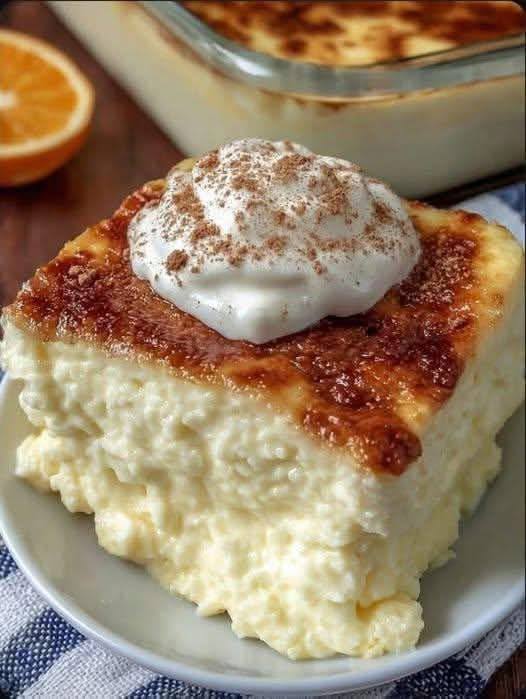
The beauty of this Silky Amish Baked Custard lies not only in its exquisite taste and texture but also in its approachable nature. It’s a perfect canvas for a dusting of warm spices like cinnamon or nutmeg, a dollop of freshly whipped cream, or even a bright citrusy accent like the half orange seen in our image. Whether you’re a seasoned baker or just starting your culinary journey, this recipe offers a rewarding experience, promising a dessert that will impress with its understated elegance and profound deliciousness. Prepare to fall in love with the ultimate comfort food.
Nutritional Information
Per serving (approximate values):
- Calories: 280
- Protein: 9g
- Carbohydrates: 25g
- Fat: 16g
- Fiber: 0g
- Sodium: 120mg
Ingredients
- 4 large eggs
- 1/2 cup granulated sugar, plus 1 tablespoon for caramelizing (optional)
- 2 1/2 cups whole milk
- 1 teaspoon pure vanilla extract
- 1/4 teaspoon salt
- 1/4 teaspoon ground nutmeg, plus more for dusting
- Whipped cream, for serving (optional)
Instructions
- Preheat your oven to 325°F (160°C). Prepare a large roasting pan or baking dish that can comfortably hold your custard ramekins.
- Boil a kettle of water for the water bath.
- In a large bowl, gently whisk together the eggs and 1/2 cup granulated sugar until just combined and slightly frothy. Be careful not to incorporate too much air, as this can lead to a less silky texture.
- In a separate saucepan, heat the whole milk over medium heat until it’s steamy and hot, but not boiling. You’ll see small bubbles forming around the edges.
- Slowly temper the hot milk into the egg mixture. To do this, gradually pour a thin stream of hot milk into the egg mixture while continuously whisking. This prevents the eggs from scrambling. Continue adding the milk until it’s all incorporated.
- Stir in the vanilla extract, salt, and 1/4 teaspoon ground nutmeg.
- For the silkiest custard, strain the mixture through a fine-mesh sieve into a clean bowl or a large measuring cup with a spout. This removes any bits of cooked egg or chalazae, ensuring a perfectly smooth texture.
- Divide the custard mixture evenly among 4-6 individual ramekins (6-ounce capacity each) or pour into a single 1-quart baking dish.
- Carefully place the filled ramekins or baking dish into the larger roasting pan.
- Pour the hot water from the kettle into the roasting pan, making sure the water comes about halfway up the sides of the ramekins or baking dish. This water bath (bain-marie) creates a gentle, even cooking environment, preventing the custard from curdling and promoting that signature silky texture.
- Carefully transfer the roasting pan with the ramekins and water bath to the preheated oven.
- Bake for 45-60 minutes for individual ramekins, or 60-75 minutes for a single large dish. The custard is done when the edges are set, but the center still has a slight jiggle when gently shaken. An inserted knife or toothpick near the center should come out clean.
- Once baked, carefully remove the roasting pan from the oven. Using tongs or oven mitts, carefully lift the ramekins or baking dish out of the water bath.
- Allow the custards to cool completely on a wire rack at room temperature. For the best texture and flavor, refrigerate for at least 3-4 hours, or preferably overnight, until thoroughly chilled and firm.
- Optional Caramelized Top: If you desire a slightly caramelized top, you can do this just before serving. Sprinkle the remaining 1 tablespoon of granulated sugar evenly over the chilled custard. Use a kitchen blow torch to caramelize the sugar until golden brown and bubbly. Alternatively, you can place the chilled custards under a preheated broiler for 1-2 minutes, watching carefully to prevent burning.
- Serve chilled, topped with a dollop of whipped cream and an extra dusting of ground nutmeg, if desired.
Cooking Tips and Variations
For the ultimate Silky Amish Baked Custard, always start with fresh, high-quality ingredients. Farm-fresh eggs and whole milk will make a noticeable difference in both flavor and texture. When whisking the eggs and sugar, be gentle; you want to combine them without incorporating too much air, as excess air can lead to a more porous, less silky custard. The tempering process is crucial: slowly adding the hot milk to the eggs prevents them from cooking too quickly and scrambling. Patience here will be rewarded with a smoother base. Don’t skip straining the custard mixture through a fine-mesh sieve; this step is a secret weapon for achieving that perfectly smooth, lump-free consistency that defines a truly “silky” custard. The water bath (bain-marie) is non-negotiable for baked custards; it provides a moist, even heat that prevents the edges from overcooking before the center is set, ensuring a uniform, delicate texture throughout. Overbaking is the enemy of silky custard, so watch carefully and remove the custards when they still have a slight wobble in the center; they will continue to set as they cool. Chilling the custard thoroughly is also essential for it to fully firm up and develop its optimal texture.
For delightful variations, consider infusing the milk with other flavors before heating. A cinnamon stick, a few cardamom pods, or even a strip of orange peel can be simmered in the milk, then strained out before tempering. For a richer flavor profile, you can substitute some of the whole milk with heavy cream. If you enjoy a hint of citrus, a teaspoon of orange zest can be added to the custard mixture. For an adult twist, a tablespoon of rum or brandy can be added with the vanilla. Toppings are where you can really get creative: beyond classic whipped cream and nutmeg, think fresh berries, a drizzle of caramel sauce, a sprinkle of toasted nuts, or even a spoonful of fruit compote. For a special occasion, you could bake the custard in a larger, decorative ceramic dish and serve it family-style. If you prefer individual portions but don’t have ramekins, oven-safe coffee mugs or small oven-safe bowls can work in a pinch, as long as they fit comfortably in your water bath.
Storage and Reheating
Once your Silky Amish Baked Custard has cooled completely, it should be stored in the refrigerator. If baked in individual ramekins, you can cover each ramekin tightly with plastic wrap. If baked in a single dish, cover the entire dish with plastic wrap. Properly stored, the custard will remain fresh and delicious for up to 3-4 days in the refrigerator. Due to its delicate nature and dairy content, it’s not recommended to store baked custard at room temperature for extended periods.
Baked custard is typically enjoyed chilled, directly from the refrigerator. Reheating is generally not recommended as it can alter the delicate texture and lead to a less silky, potentially rubbery consistency. The beauty of this dessert lies in its cool, refreshing quality. If you absolutely prefer it slightly warmed, you could try letting it sit at room temperature for 15-20 minutes before serving, but avoid microwaving or baking again, as these methods are likely to ruin the texture you worked so hard to achieve. The best way to experience the exquisite silkiness is to savor it cold.
Frequently Asked Questions
Why did my custard curdle or become grainy?
Custard typically curdles or becomes grainy due to overcooking or cooking at too high a temperature. The eggs in the custard are delicate and will seize up if heated too quickly or for too long. Using a water bath (bain-marie) is essential to prevent this, as it provides a gentle, even heat. Also, ensure you temper the hot milk into the eggs slowly to avoid scrambling them from a sudden temperature shock. Removing the custard from the oven when it still has a slight jiggle in the center is key, as it will continue to set as it cools.
Can I make this custard dairy-free or with a milk substitute?
While traditional Amish baked custard relies on whole milk for its rich flavor and creamy texture, you can experiment with dairy-free alternatives. Full-fat coconut milk or a rich oat milk can work, but be aware that the flavor and texture will be slightly different. Coconut milk will impart a distinct coconut flavor, and plant-based milks may not yield the exact same silky consistency as whole dairy milk due to differences in fat and protein content. You may need to adjust cooking times slightly as well.
What’s the best way to tell if the custard is done baking?
The best way to determine if your custard is done is by gently shaking the ramekin or baking dish. The edges should appear set and firm, but the center should still have a slight, delicate jiggle. If you insert a thin knife or skewer about an inch from the edge, it should come out clean. Avoid baking until the center is completely firm, as it will continue to set as it cools, and overbaking will result in a rubbery texture.